


What are movement disorders?
Kaleida Health provides comprehensive care for Parkinson’s disease and movement disorders, including diagnosis, treatment, education, research and ongoing support. Our program serves individuals with Parkinson’s disease, essential tremor, dystonia and other movement disorders, offering access to advanced medical and surgical clinical trials. Expert care helps manage symptoms, improve daily function and maintain quality of life.
Getting care from one of our providers? The MyChart patient portal provides you with easy access to stay informed on all your care.
Who Can Benefit from Movement Disorder Care?
You may benefit from this care if you are:
-
An adult with tremor, stiffness, slowed movement or balance problems
-
A child or adolescent with suspected or diagnosed movement disorders, including tremor, dystonia or abnormal movements
-
Living with Parkinson’s disease, essential tremor, dystonia or another movement disorder
-
Experiencing spasticity from multiple sclerosis, spinal cord injury, brain injury or stroke
-
Seeking advanced treatment options, including surgical procedures or clinical trials

What conditions do we treat?
The multidisciplinary program specializes in the evaluation and treatment of a wide range of movement disorders, including:
Parkinson’s disease and other Parkinsonian syndromes
Essential tremor
Spasmodic torticollis and other focal or generalized dystonia
Hemifacial spasm
Blepharospasm
Unusual and complex movement disorders
Medically refractory spasticity secondary to multiple sclerosis, spinal cord injury, traumatic brain injury and stroke
The Care We Provide
Our Center is staffed by fellowship-trained Parkinson’s and movement disorder specialists and a coordinated, multidisciplinary team. Treatment may include medication, therapy, injections, advanced procedures and access to clinical trials when appropriate. Pediatric care is coordinated through our pediatric neurology team for children and adolescents with movement disorders at Golisano Children's Hospital of Buffalo.
Access to the latest pharmaceutical options for controlling symptoms of Parkinson’s disease and other movement disorders.
Effective treatment for conditions such as spasmodic torticollis, hemifacial spasm, blepharospasm, focal dystonia and spasticity.
Precise delivery of medication such as baclofen into the spinal fluid to treat severe spasticity, dystonia or chronic pain.
Implanted devices that help manage chronic pain by modulating nerve signals.
Precision procedures for Parkinson’s disease and essential tremor, available exclusively at Buffalo General Medical Center’s Comprehensive Movement Disorders Center.
Focused ultrasound is a breakthrough, FDA-approved, incision-free outpatient procedure for patients with essential tremor or tremor-dominant Parkinson’s disease. It is an option for patients whose symptoms are not adequately controlled with medication or who wish to avoid traditional surgery, and unlike deep brain stimulation, focused ultrasound does not require invasive wires or implants.
FUS uses MRI-guided sound waves to target a specific area in the thalamus, a brain structure that helps control movement. The targeted tissue is heated and destroyed, reducing tremor symptoms with minimal recovery time. Patients from across the region often travel to Buffalo General Medical Center for this care; the next closest providers in the US are nearly 200 miles away.
Who may benefit:
- Adults over the age of 22 with a confirmed diagnosis of essential tremor
- Patients whose tremors interfere with daily activities
- Patients whose symptoms are not adequately controlled with medication
- Patients who prefer a non-invasive alternative to surgery
Advantages:
- No traditional surgery or skull incision, reducing infection risk
- Precise targeting of brain tissue responsible for tremors
- Outpatient procedure with short recovery time
- Most patients experience immediate and significant reduction in tremors
- Effect may last up to three years
- No exposure to radiation
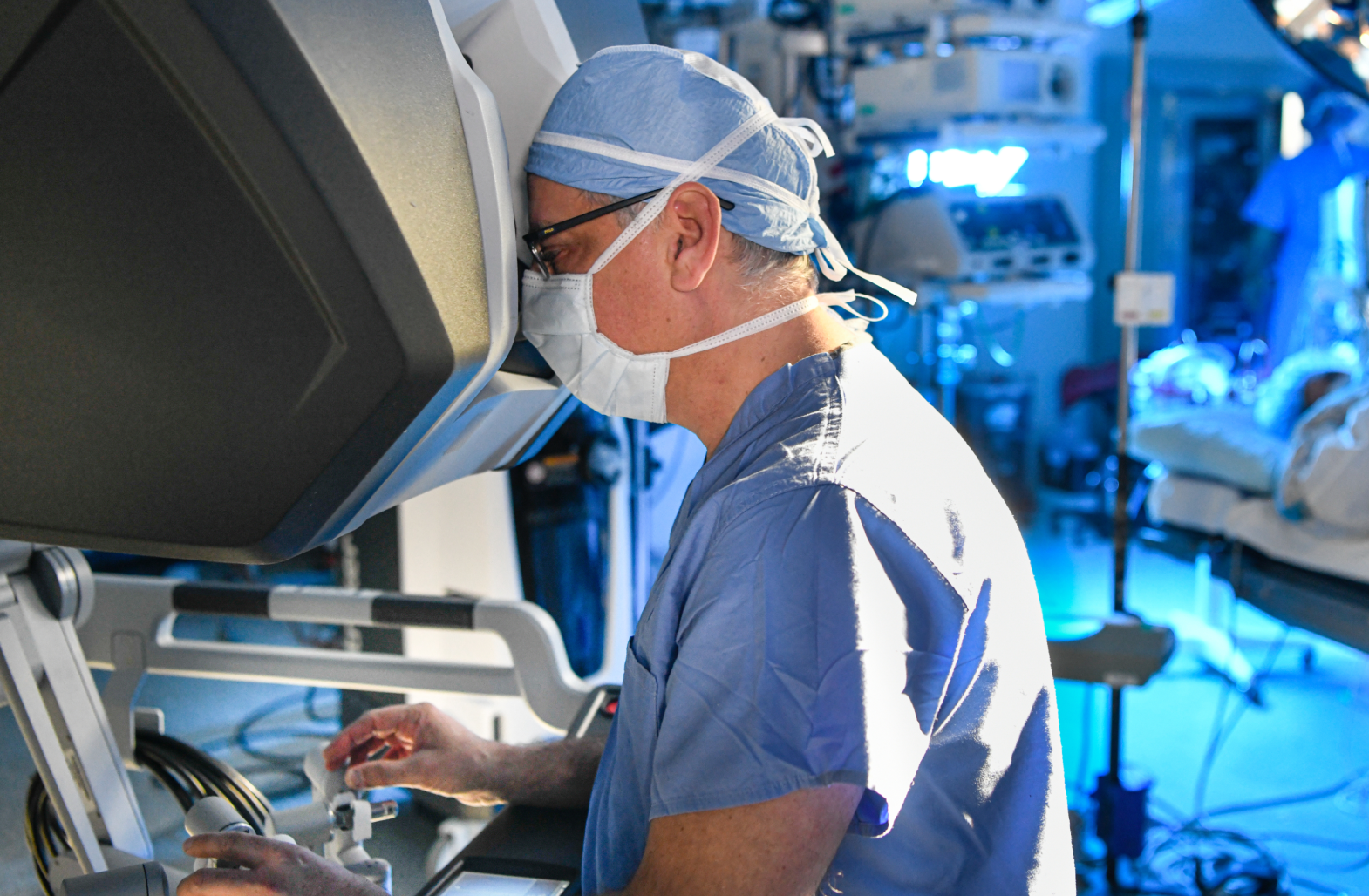
ClearPoint Neuro is an FDA-approved MRI-guided system that allows neurosurgeons to perform minimally invasive procedures with exceptional precision. Real-time MRI guidance enables physicians to visualize the brain during the procedure, improving accuracy, protecting healthy tissue and supporting better symptom control, fewer complications and greater confidence in complex neurological treatments.
This technology supports deep brain stimulation for Parkinson’s disease and essential tremor, select brain biopsies, next-generation cell and gene-based therapies and laser ablation for tumors and epilepsy.
Who may benefit:
- Patients with Parkinson’s disease or essential tremor being considered for deep brain stimulation
- Patients with complex or difficult-to-treat movement disorders
- Patients interested in clinical trials or innovative therapies
Kaleida Health’s investment in ClearPoint Neuro advances patient care and research, positioning Western New York as a regional leader in precision neurological treatment.
Why patients choose Kaleida Health’s Movement Disorder Center
Your care begins with a comprehensive, team-based evaluation designed to understand your symptoms, goals and daily needs.
Your evaluation may include:
-
A comprehensive assessment by a movement disorder specialist for Parkinson’s disease, essential tremor, dystonia, hemifacial spasm, blepharospasm and other movement disorders
-
Physical therapy for mobility, balance and strength
-
Occupational therapy for daily activities and independence
-
Speech therapy for communication and swallowing
-
Exercise and wellness planning
-
Neuropsychological assessment when needed
Why Patients Choose Kaleida Health’s Movement Disorder Center
-
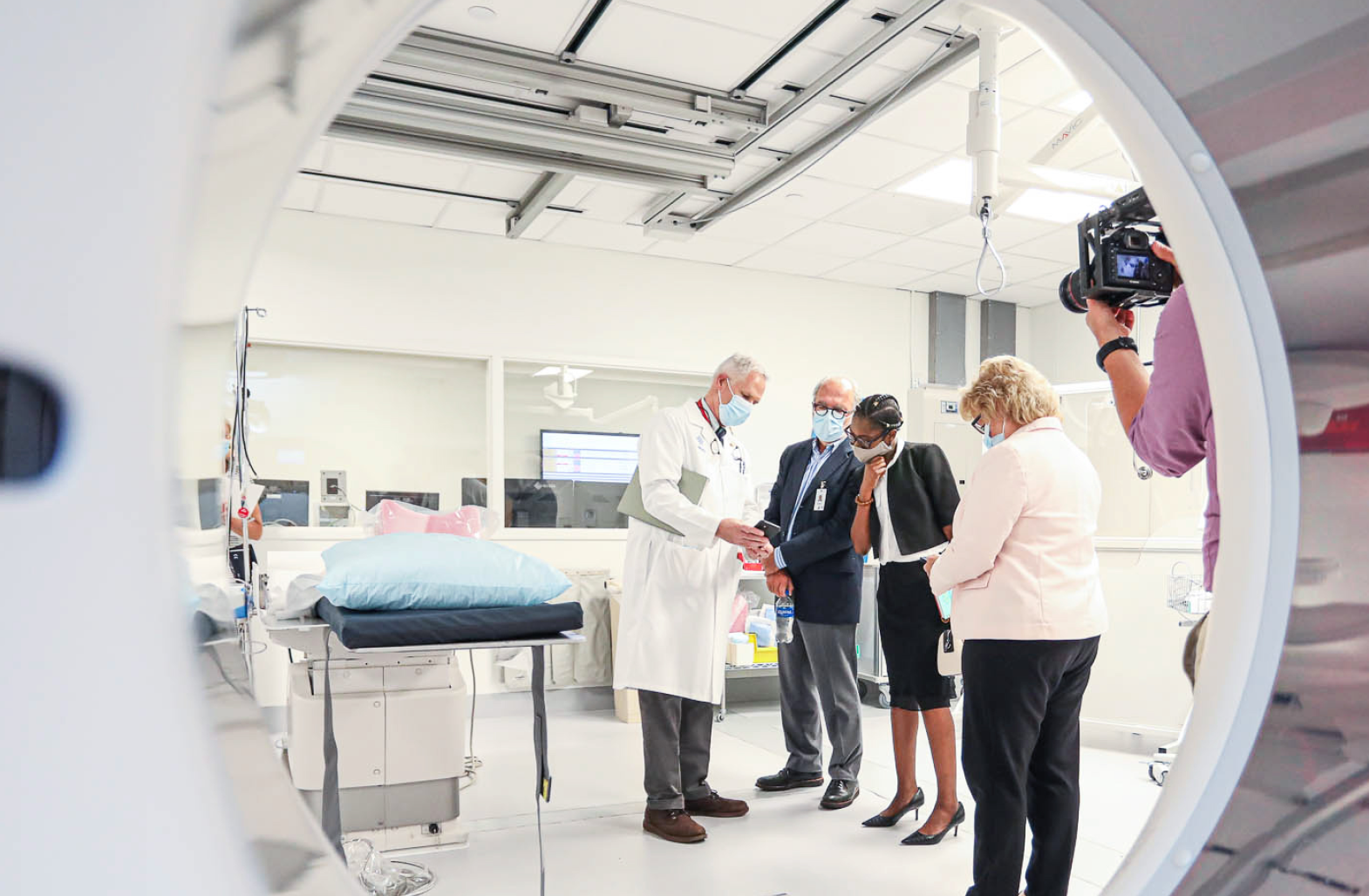
Fellowship-trained specialists: Our movement disorder neurologists have advanced training and experience in diagnosing and treating complex neurological conditions.
-
Coordinated, multidisciplinary care: Physical, occupational and speech therapists, along with nursing and support staff, work together to create individualized treatment plans.
-
Access to advanced procedures and technology: We provide cutting-edge surgical options, including deep brain stimulation, Gamma Knife thalamotomy, focused ultrasound and Clearpoint Neuro–guided therapies, exclusively in Western New York.
-
National recognition for excellence: Designated as a National Parkinson’s Foundation Outreach Center, reflecting our commitment to high-quality care and patient support.
-
Innovative research and clinical trials: Patients benefit from the latest therapies and participation in pioneering clinical studies.
-
Comprehensive support programs: From therapy and rehabilitation to education and family resources, we help patients and caregivers navigate every step of their care journey.
When needed
Where you can receive care
Buffalo General Medical Center
E Building, 2nd Floor, 100 High Street, Buffalo, NY 14203. Monday to Friday, 8:30 a.m. to 4:30 p.m.
Olean General Hospital
Mildred Milliman Outpatient Surgery Center, 500 Main Street, Olean, NY 14760. Appointments: (716) 375-6993.
Golisano Children’s Hospital of Buffalo
Outpatient Center (Conventus), 1001 Main Street, Third Floor, Buffalo, NY 14203. Pediatric neurology: (716) 323-6150.
Golisano Children’s Hospital of Buffalo provides specialized pediatric neurology services, including the diagnosis and management of movement disorders in children and adolescents. The pediatric neurology team focuses on understanding each child’s symptoms, supporting families and creating treatment plans that help children function, develop and participate in daily life. For more information, please visit the Pediatric Neurology page.
1001 Main Street, Third Floor
Buffalo, NY 14203
Phone: (716) 323-6150
Fax: (716) 323-6674
The pediatric neurology team diagnoses and treats children and adolescents with movement disorders. Care focuses on understanding each child’s symptoms, supporting families and creating treatment plans that help children function, develop and participate in daily life.
For more information, please visit the Pediatric Neurology page.
Take the next step in your care
Expert Parkinson’s disease and movement disorder care is available to help you manage symptoms, improve function and maintain quality of life.
Frequently asked questions
If tremor, stiffness, slowed movement, muscle spasms or spasticity affect daily life, a specialist can help determine the cause and next steps.
Not always. Many patients benefit from medication and therapy. Advanced surgical treatments are considered when symptoms are not adequately controlled.