

What is therapeutic endoscopy?
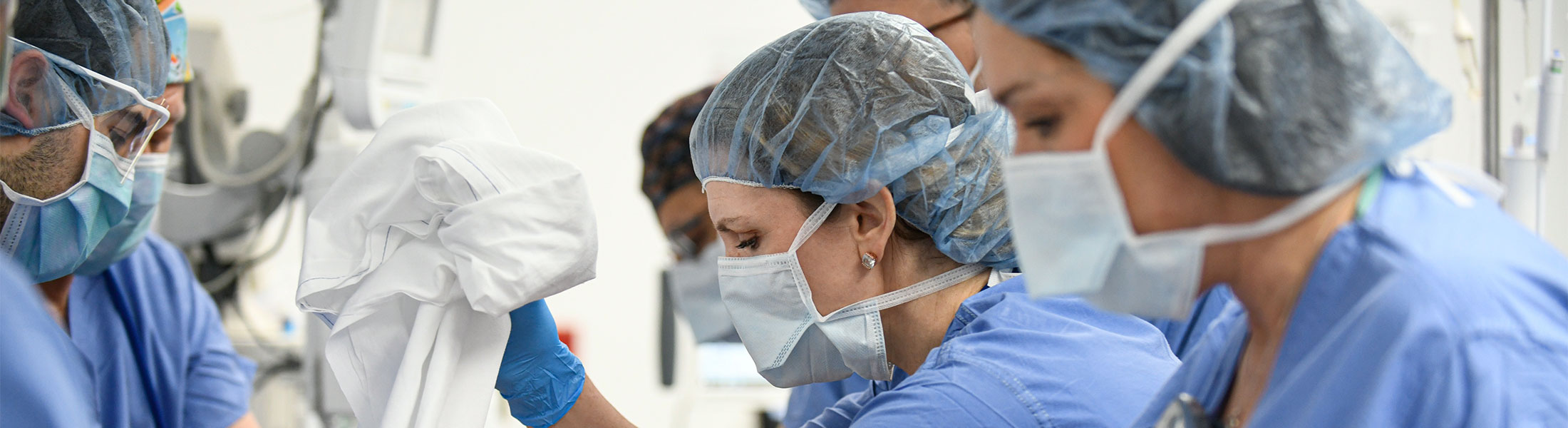
An endoscopy is a non-surgical procedure in which doctors use a tool called an endoscope for an internal view of organs like the stomach and esophagus. During therapeutic endoscopy, doctors can do more than diagnose – they can also provide real-time treatment.
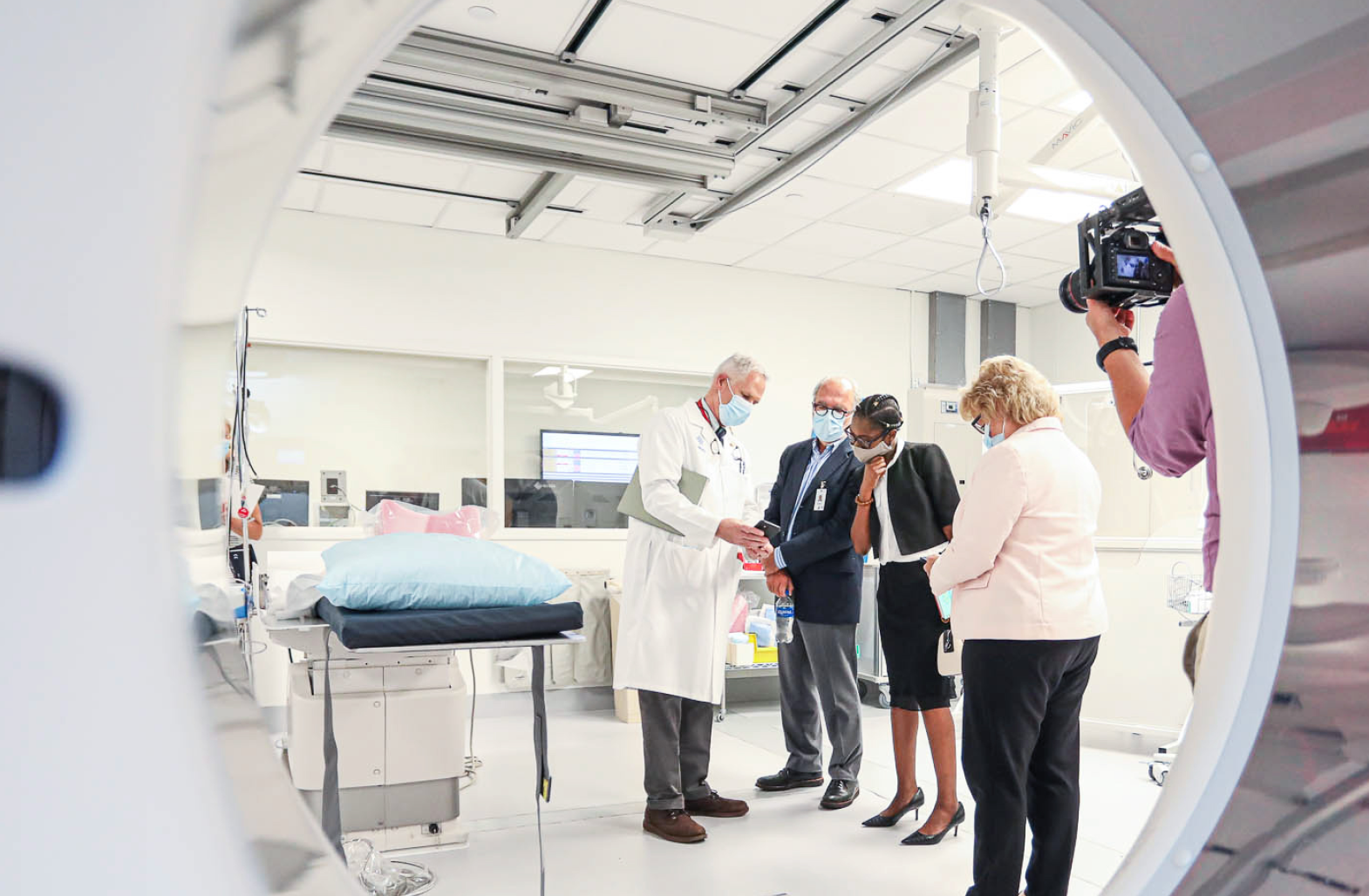
Located in the state-of-the-art endoscopy labs within Buffalo General Medical Center/Gates Vascular Institute, the Center for Advanced Therapeutic Endoscopy provides comprehensive gastroenterology care for patients.
Our Center stands alone in the depth of experience and advanced skill set provided by expert gastroenterologists and our multidisciplinary team. Referring physicians from across the region turn to our team to handle the most complex cases in Western New York.
Who can benefit from this care
Therapeutic endoscopies often result in less invasive treatments for patients who have conditions that affect the stomach, intestines and esophagus. They can also reduce symptoms and improve quality of life for patients with certain advanced cancers.
Common conditions we treat

Esophagus
Barrett’s esophagus (RFA ablation), esophageal stenosis (dilation and stenting), esophageal cancer (EUS staging, EMR or ESD removal of early cancers, stent placement), motility and swallowing disorders (POEM and dilation for achalasia, spasm and outflow obstruction) and esophageal varices.
Stomach
Gastric cancer (EMR or ESD removal of early cancers, staging of advanced cancers), gastroparesis (G-POEM), fistulas (endoscopic suturing or clipping), weight regain after gastric bypass (TORe revision), gastric metaplasia (mapping and ablation) and gastric polyps (surveillance and removal).
Pancreas
Pancreatic cancer diagnosis, staging and biopsy with EUS, stenting via ERCP, pain relief with celiac plexus block, duodenal stenting for obstruction, cysts and pseudocysts (evaluation and sampling), pancreatitis (necrosectomy, stenting, drainage) and pancreatic stones (pancreatoscopy, removal, lithotripsy).
Bile duct
Altered anatomy ERCP (retrograde enteroscopy and EDGE procedure), bile duct stones (removal and lithotripsy), bile duct cancers (diagnosis, staging and stenting), ampullary polyps (endoscopic ampullectomy) and bile duct strictures (dilation and stenting).
Colon
Large colon polyps (EMR and ESD), fistula closure, stricture dilation, radiation proctitis (RFA or APC) and stenting for colon cancer.
The care we provide
In addition to providing preventative and screening procedures like endoscopies and colonoscopies, our GI doctors are extremely skilled in hard-to-treat, complex cases, with diagnostic and treatment options available to treat patients with a wide range of conditions and disorders.
ERCP with Spyglass is used to diagnose and treat disorders of the bile ducts and pancreas. The Spyglass system allows for high-definition visualization of the biliary and pancreatic ducts, enabling precise diagnosis and targeted therapy for conditions like gallstones, strictures and tumors.
The EDGE procedure is designed for patients who need ERCP, but who have undergone previous gastric bypass surgery. EDGE allows the doctor to place a stent to connect the gastric pouch to the excluded stomach in order to diagnose and treat issues such as gallstones, infections or tumors.
POEM is a minimally invasive procedure that most commonly treats achalasia (a disorder that results in difficulty swallowing). Results include improved passage of food and relief of related symptoms, such as chest pain.
G-POEM is a specialized variation of POEM that treats gastroparesis (delayed gastric emptying) to alleviate symptoms like nausea, vomiting and bloating.
TORe helps those who have regained weight after gastric bypass surgery by tightening the opening of the gastric outlet. This slows down the emptying of food from the stomach, helping patients feel full longer.
EMR and ESD enable the doctor to remove abnormal, pre-cancerous and early-stage gastrointestinal tumors, growths and lesions with precise, minimally invasive efforts that preserve the surrounding healthy tissue. These procedures reduce the risk of recurrence and, often, the need for surgical intervention.
This procedure combines endoscopy with ultrasound imaging to evaluate and treat conditions affecting the digestive tract and adjacent organs. Specifically, the procedure is used to help detect tumors and other abnormalities, as well as guide interventions such as cyst drainage.
This procedure allows the doctor to remove specifically located tumors and lesions, offering patients a less invasive alternative to surgery with a high success rate and low rate of recurrence.
Esophageal Ablation Therapy encompasses a range of endoscopic techniques used to treat conditions affecting the esophagus, such as Barrett's esophagus and esophageal dysplasia. These procedures enable removal of abnormal esophageal tissue via techniques like radiofrequency ablation (RFA) or cryotherapy, with the goal of reducing the risk of progression to esophageal cancer.
This minimally invasive technique allows for the effective closure of defects, promoting healing and reducing the risk of complications such as infection and leakage.
For patients with a BMI of 30 or higher who have not had success with lifestyle modifications, minimally invasive weight loss procedures can be a viable alternative to bariatric surgery. These procedures shorten and reshape the stomach, allowing patients to feel full faster and lose weight.
Meet your care team
In addition to providing preventative and screening procedures like endoscopies, colonoscopies and sigmoidoscopies, our gastroenterology providers are extremely skilled at treating complex cases, with diagnostic and treatment options available for a wide range of symptoms and conditions.
-

Lorem ipsum dolor sit amet, consectetur adipiscing elit, sed do eiusmod tempor incididunt ut labore et dolore magna aliqua.
—Patient Name -
Excepteur sint occaecat cupidatat non proident, sunt in culpa qui officia deserunt mollit anim id est laborum.
—Another Patient
Patient resources
Innovative Treatments in Gastroenterology
Colonoscopy prep instructions
Upper Endoscopy (EGD) prep instructions
Flex Sigmoidoscopy prep instructions
Esophageal Manometry prep instructions
Ready to get relief from your digestive symptoms?
Contact us today to schedule a consultation.