
August 1, 2022
What You Should Know About Monkeypox: August 1, 2022
Purpose
To provide healthcare providers with instructions for the care of patients with confirmed or suspected monkeypox.
Policy
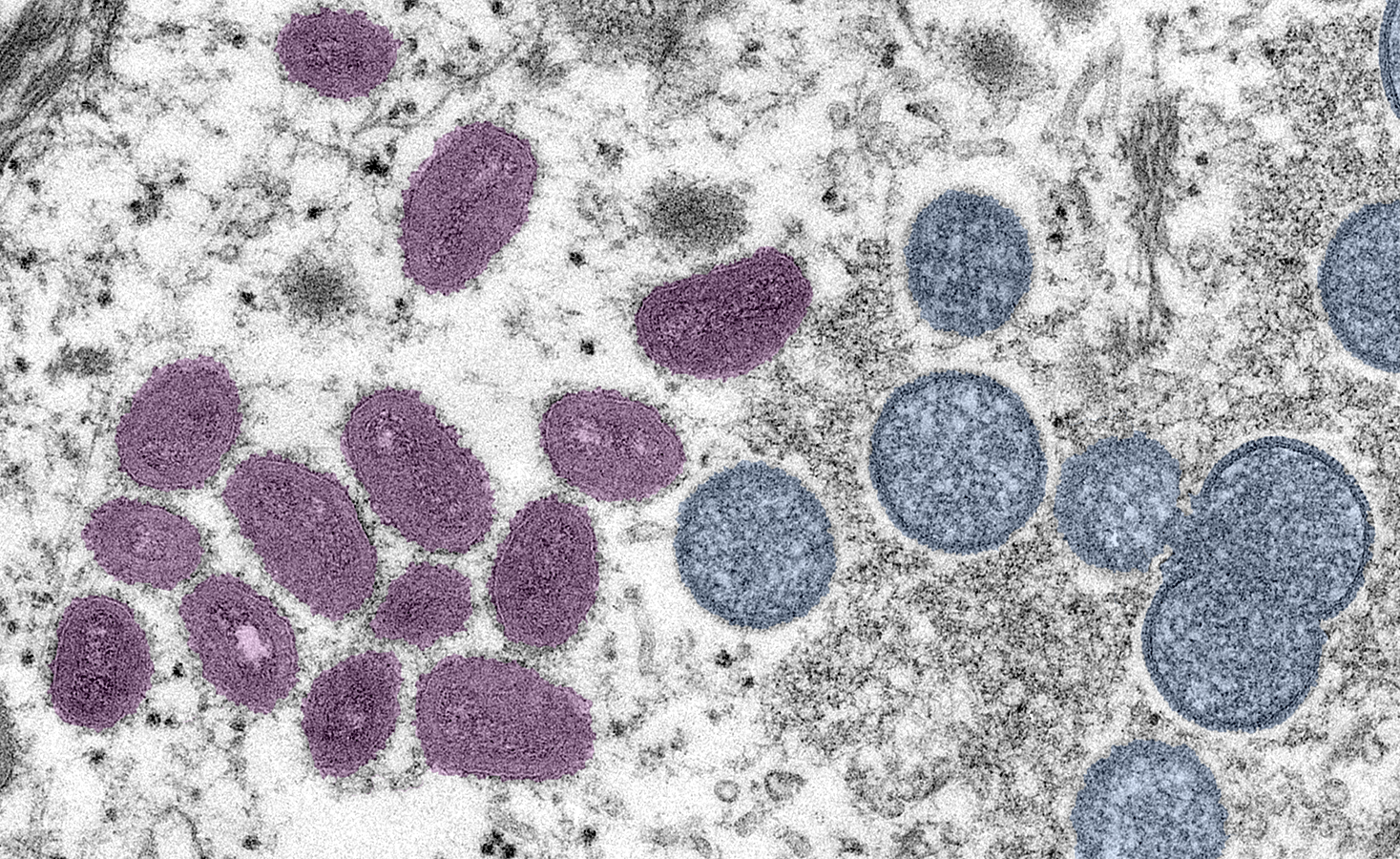
Monkeypox is a disease caused by infection with the monkeypox virus. Monkeypox virus belongs to the Orthopoxvirus genus of viruses that also includes smallpox virus (variola) and vaccinia virus (historically used in the smallpox vaccine.) The Poxviridae family includes the Orthopoxvirus genus and also the virus that causes molluscum contagiosum. Monkeypox is not related to chickenpox.
Monkeypox can be spread in a variety of ways. This virus is historically zoonotic in nature from infected animals that either scratch/bite an individual or by eating meat/products that are infected. The most common way individuals spread monkeypox is through direct contact with infectious rash, scabs and/or body fluids. It is possible to also contract monkeypox through respiratory secretions during face-to-face contact, or during intimate physical contact. Spread can also happen by touching clothing or linens that have been contaminated with infectious rash or body fluids.
Assessment
Index of suspicion is key to identify potential monkeypox case or exposure, and assessment must include both clinical and epidemiologic information:
- The patient should be questioned regarding any of the following within 21 days of illness onset:
- Contact with a person or people who have a similar appearing rash or who were diagnosed with or suspected to have monkeypox
- Close or intimate in-person contact with persons in a social network experiencing monkeypox cases
- Traveled to a country with confirmed cases of monkeypox or traveled to an African country where monkeypox virus is endemic. Specifically note any such countries.
- Clinical findings: prodrome of fever, malaise, headache, muscle aches, lymphadenopathy, chills and exhaustion (not all may be present)
- Rash appears 1-3 days later, typically seen on face, genital or perianal lesions, presenting as macules, papules, vesicles, or pustules. The rash can last for 2-4 weeks.
- Pain has been reported as a significant symptom, requiring proper management when repositioning or when IV access is necessary.
Notify Infection Prevention or Hospital epidemiologist if a suspect case is identified. Report any suspect/confirmed cases to the Local Health Department (LHD) immediately (the county in which the patient resides).
Infection Prevention and Control
- All suspect/confirmed monkeypox cases are to be placed in Contact/Droplet/Standard Precautions with PPE to include gown, gloves, N-95 respirator and eye protection.
- Place patient in a single-patient room and keep door closed at all times (if safe to do so), with a dedicated bathroom.
- Intubation and extubation, and any procedures likely to spread oral secretions, should be performed in an airborne isolation room, if possible.
- Meticulous Hand Hygiene practices must be used with ALL patient contact.
- Transporting of the patient outside of the room should be kept to a minimum for medically necessary treatments. If transport is necessary, keep the patient covered with clean sheet and place a well-fitted face mask, as tolerated, on patient during transport.
Discontinuation of Precautions
- Decisions regarding discontinuation of isolation precautions should be made in consultation with Infection Prevention Team.
- Isolation Precautions should be maintained until all lesions have crusted, those crusts have separated, and a fresh layer of healthy skin has formed underneath.
- Pitted scars and/or areas of lighter or darker skin may remain after scabs have fallen off.
Recommendations for Reporting, Testing and Specimen Collection
Specimens for testing can be submitted either to the New York State Health Department Wadsworth or a commercial laboratory as a send out test from the Kaleida Health laboratory.
In either scenario, only personnel wearing appropriate PPE (gown, gloves, goggles or face shield, and N-95 respirator) should be involved in specimen collection for suspected monkeypox cases.
For specimens to be submitted to the NYSDOH Wadsworth Center:
- Specimen collection and submission must be arranged with the local health department of the patient's county of residence.
- NYSDOH Wadsworth Center will accept specimens collected and transported in viral transport media (VTM) OR collected and transported dry. Specimens in VTM can be tested for orthopoxvirus, varicella zoster virus, and herpes simplex viruses I and II. Specimens collected dry can only be tested for orthopoxvirus. Testing for other viruses should be done locally.
- For specific specimen collection instructions, follow link: CDC_HAN_with_Cover_MPox_Final_17June_1655497561508_0.pdf (wadsworth.org).
For specimens to be submitted to commercial laboratories through the Kaleida Health laboratory:
- The specimen should be collected in a red capped, double dry swab collection set.
- It should be sent with a downtime requisition and list what testing is requested.
- The local health department still must be notified when this is done since the patient is a suspect case.
Environmental Infection Control
- Standard cleaning and disinfection procedures for precaution room should be performed using an EPA-registered hospital-grade disinfectant with an emerging viral pathogen claim, including the changing of curtains.
- Manage waste from suspected/confirmed monkeypox patients as Regulated Medical Waste. Place a red bag in the patient’s room.
- Activities such as dry dusting, sweeping, or vacuuming should be avoided. Wet cleaning methods are preferred.
- Management of food service items should also be performed in accordance with routine procedures.
- Soiled laundry (e.g., bedding, towels, personal clothing) should be handled in accordance with recommended standard practices, avoiding contact with lesion material that may be present on the laundry. Soiled laundry should be gently and promptly contained in an appropriate laundry bag and never be shaken or handled in manner that may disperse infectious material.
Employee Exposure
Healthcare workers who have unprotected exposures (i.e., not wearing PPE) to patients with monkeypox do not need to be excluded from work duty, but should undergo surveillance for symptoms, which includes measurement of temperature at least twice daily for 21 days following the exposure. See the Degree of Exposures below. Prior to reporting for work each day, the healthcare worker should be monitoring for evidence of fever or rash. If any of these signs or symptoms are present the staff member must isolate and notify their manager and Employee Health.
Any staff members who believe they may have been exposed to someone with confirmed monkeypox and are experiencing signs or symptoms, including development of a rash, they should isolate at home and contact primary care provider immediately for further instruction. Additionally, Erie County Department of Health can be contacted at 716-858-7690.
Employee Health should be notified of any/all work related exposures related to monkeypox and will provide direction if any further follow-up is needed. A STARS report, specific to the event/exposure, should be completed in a timely manner.
Employee Health Office: BGMC 716-859-2180 MFSH 716-568-3791 Larkin 716-859-8500
References for Employee Health:
Monitoring People Who Have Been Exposed | Monkeypox | Poxvirus | CDC
NYS Guidance 7-22-22 - Symptomatic/Asymptomatic Guidance for Health Care Workers
Recommendations Based on Degree of Exposure:
General References:
CDC: https://www.cdc.gov/poxvirus/monkeypox/index.html
CDC Clinical, with Pictures: https://www.cdc.gov/poxvirus/monkeypox/clinicians/clinical-recognition.html
CDC Clinical Management: https://www.cdc.gov/poxvirus/monkeypox/clinicians/clinical-guidance.html
CDC Infection Control: https://www.cdc.gov/poxvirus/monkeypox/clinicians/infection-control-healthcare.html
NYSDOH General: https://www.health.ny.gov/diseases/communicable/zoonoses/monkeypox/
NYSDOH Providers: https://www.health.ny.gov/diseases/communicable/zoonoses/monkeypox/providers/
NYSDOH: https://www.health.ny.gov/diseases/communicable/zoonoses/monkeypox/docs/2022-07-08_han.pdf
NYSDOH Healthcare Settings: NYS Guidance 7-25-22
Infection Prevention Team
John Sellick, DO
Infectious Disease/Epidemiologist
Office: 859-5600
BGMC/GVI
Tracie Arnold, BSN, RN, CIC
Infection Preventionist
Office: 859-1703
Suzanne Bradley, BSN, RN, CIC
Infection Preventionist
Office: 859-7414
Lisa Hoyt, BSN, RN, CIC
Infection Preventionist
Office: 859-1519
Robin McLaughlin, BSN, RN, CIC
Infection Preventionist
Office: 859-7108
Donna Wirth, BSN, RN, CIC
Infection Preventionist
Office: 859-2528
MFSH/DMP
Doreen Grobe, BSN, RN, CIC
Infection Preventionist
Office: 568-3996
Pager: 443-0034
Debby Ohayon, BSN, RN, CIC
Infection Preventionist
Office: 568-3999
Pager: 443-1335
OCH
Tracy Meyer, BSN, RN, CIC
Infection Preventionist
Office: 323-1756
Contact your site Infection Preventionist or visit the Infection Precention page on KaleidaScope.