
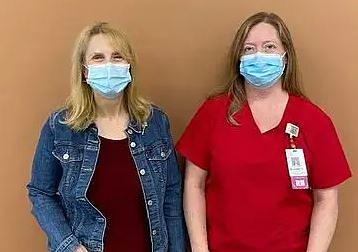
Pictured above: Triage Nurses Rose Julius and Libby Boncore
Triage teams are a vital part of recovery in the home care setting. Nurse triage processes are recommended for home health patients to ensure patients receive care needed. An experienced triage nurse can help to facilitate crucial care when needed, after hours, to help avoid an emergency room visit or rehospitalization.
Home health care has been determined to be an effective alternative and most cost-effective choice in providing post-acute care needs to patients discharged from facilities. Home health agencies enable an individual to recover in their own home, in a familiar and comfortable setting.
Triage teams are a vital part of recovery in the home care setting. Nurse triage processes are recommended for home health patients to ensure patients receive care needed. An experienced triage nurse can help to facilitate crucial care when needed, after hours, to help avoid an emergency room visit or rehospitalization.
A key part to the triage process is for the nurse to gather enough information from the patient to determine whether a home visit by a clinician is necessary or whether the patient needs to seek immediate care by having a family member take the patient to the nearest facility or the use of EMS.
The Visiting Nursing Association of WNY triage team consists of eight registered nurses who have experience in the needs of home health patients and are able to provide help via a phone conversation with the patient, their caregivers and the patient’s physician when needed. The team manages after hours calls across all 10 counties of the VNA service area.
The triage nurse has access to the patient’s information via the Electronic Medical Record and is able to look at medications, recent VNA visits, vital signs, wound status and demographics, for example, in the event they need to contact the patient’s physician. This information helps them determine if there is a change in patient status as well as whether to use telephonic problem solving with the patient or if the concern requires them to activate a clinician to the home to assess the client.
The triage team utilizes teaching guidelines to assist with troubleshooting an infusion or feeding pump and standard clinical directives to use when it is necessary to deploy the on call clinician or to send a patient for further evaluation at a facility. The goal is to resolve the patient concern telephonically, however, when the team determines there is a need for a visit to provide a treatment (insert a catheter for example) or when they cannot ascertain an adequate assessment of the patient needs over the phone, then they will deploy one of our on call nurses to make a home visit. The last resort is to send the patient to the Emergency Department unless the patient’s condition requires medical evaluation and treatment.
The triage team effectively communicates to the management team when they do have to send a patient to a facility to assure appropriate follow up in the hopes of getting the patient back home in a timely manner.
The Visiting Nursing Association triage team fields approximately 110 calls per month, and 75% of the calls are able to be resolved over the phone with further education and instruction to the patient or their family member.
Our highly skilled triage team provides a very valuable service to VNA patients every day of the year. This means VNA patients always have access to a nurse to answer their questions, provide guidance and teaching as well as to have a home visit at any time in order to keep them safely cared for at home.
Thank you VNA triage team for all that you do for VNA patients!