
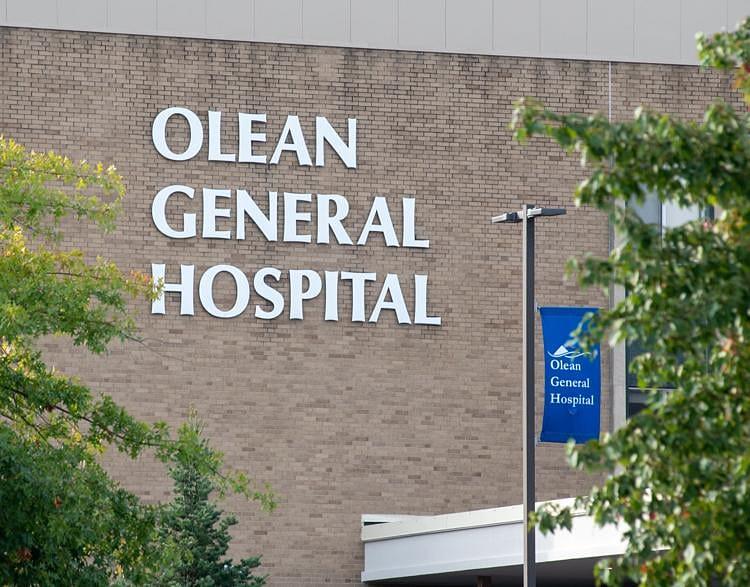
While a state report noted major shortfalls in health care providers in rural areas, officials with local hospitals said that decade-old agreements with larger networks are helping fill some of those gaps.
In a report issued this week, “The Doctor is Out: Shortages of Health Professionals in Rural Areas”, the Office of the State Comptroller looked at area counties as part of a review of issues facing rural communities in the state.
“The ability to access health care is an essential quality of life issue,” state Comptroller Tom DiNapoli said. “Without access, rural New Yorkers may have worse health outcomes and have difficulty attracting people to live in these regions of the state that have so much to offer.”
The report — which includes Cattaraugus, Allegany and Steuben counties among the 16 counties reviewed — focused on primary care, dental health, mental health, pediatric and Ob/ Gyn doctors, as well as physician assistants and nurse practitioner needs.
For example, Health Professional Shortage Area scores — where a higher score indicates more need — saw Allegany and Cattaraugus counties scoring 16 out of a possible 26 points for primary care services, noting shortfalls in practitioners. The scores were the second-highest reported in the examined counties, with Sullivan County in the Catskills receiving a score of 17.
As another example, Cattaraugus County scored 18 for dental services, while Allegany County scored 16. However, the report noted that the problems seen locally are common in many rural areas nationwide.
The report recommends three ways to help improve shortages:
■ Bring more health care to people by identifying ways to open new offices and facilities, and look at mobile and schoolbased clinics.
■ Improve access to existing care, such as transit systems, transportation vouchers, and expanding telemedicine options.
■ Pursuing policies to bolster the rural healthcare workforce, including training incentives, creating rural stipends and subsidies, or increasing reciprocity for out-of-state professionals to serve in rural areas.
At Olean General Hospital, Joseph Fuglewicz, director of Twin Tiers marketing at Olean General Hospital parent Kaleida Health, said a regional approach is the main focus to increase the number of providers available.
“Being part of Kaleida Health means that patients in our rural areas benefit from the same network of expertise, technology and coordinated resources available across the entire region,” Fuglewicz said. “It’s not about one provider in one town, it’s about connecting people to a larger continuum of care that serves our entire population.”
Upper Allegheny Health System, which includes Olean General Hospital and Bradford Regional Medical Center, joined Kaleida in 2016. Most area hospitals have partnered with regional hospital networks in recent years in similar agreements, such as hospitals in Wellsville, Hornell and Dansville partnering with the University of Rochester Medicine system; and hospitals in Jamestown, and Kane and Coudersport, Pa., partnering with the University of Pittsburgh Medical Center system.
“Through our partnership with Kaleida Health, we’re able to bring specialists directly into our communities to enhance access close to home and provide coverage where it’s needed most,” he added. “Our cardiology partnership with Kaleida Health’s Gates Vascular Institute, which helps coordinate care in our interventional cardiac catheterization lab, has been a successful example. The hospital’s recruitment team has been focused on filling gaps in services to allow for more advanced care locally. “In the past few months, we have successfully onboarded several new primary care and OB/GYN providers within our practices,” Fuglewicz said. “We continue recruiting for these positions and other specialties to ensure our region has access to the care and services it needs.”
The situation is similar at Jones Memorial Hospital in Wellsville, said CEO Jim Helms. “Rural medicine always has its unique challenges and recruitment of professional talent has long been at the top of the list,” said Helms. “At Jones, we are proud to be a sole community hospital — offering advanced healthcare to over 50,000 residents in Allegany County and the surrounding region.”
Jones joined UR Medicine in 2015, which Helms said has offered new opportunities. For example, the hospital has opened 13 rural health clinics in Allegany County and western Steuben County, with almost a dozen professionals focusing on obstetrics, gynecology and pediatrics, including a certified nurse midwife. For specialty providers, Jones has worked with UR Medicine to attract new professionals, such as those working in orthopaedics, neurology and oncology, who work at the UR Medicine hospitals in Rochester like Strong Memorial Hospital as well as at UR affiliates in more rural areas.
“For example, because we are affiliated with UR Medicine, we can operate two National Cancer Institute designated oncology clinics in Wellsville and Olean. The goal is to provide the same high-quality care you would receive in the metropolitan area right here in your hometown. “With the shortage of physicians coming to rural communities, to ensure continued access to care it means you must be creative in your staffing and recruitment efforts and your care delivery model,” Helms said.
“Health systems must leverage the special programs available to them if they are designated a Health Professional Shortage Area. This includes loan repayment programs and immigration opportunities; at Jones Memorial we work to leverage both. We remain deeply committed to providing the highest quality care to the communities we serve.”