
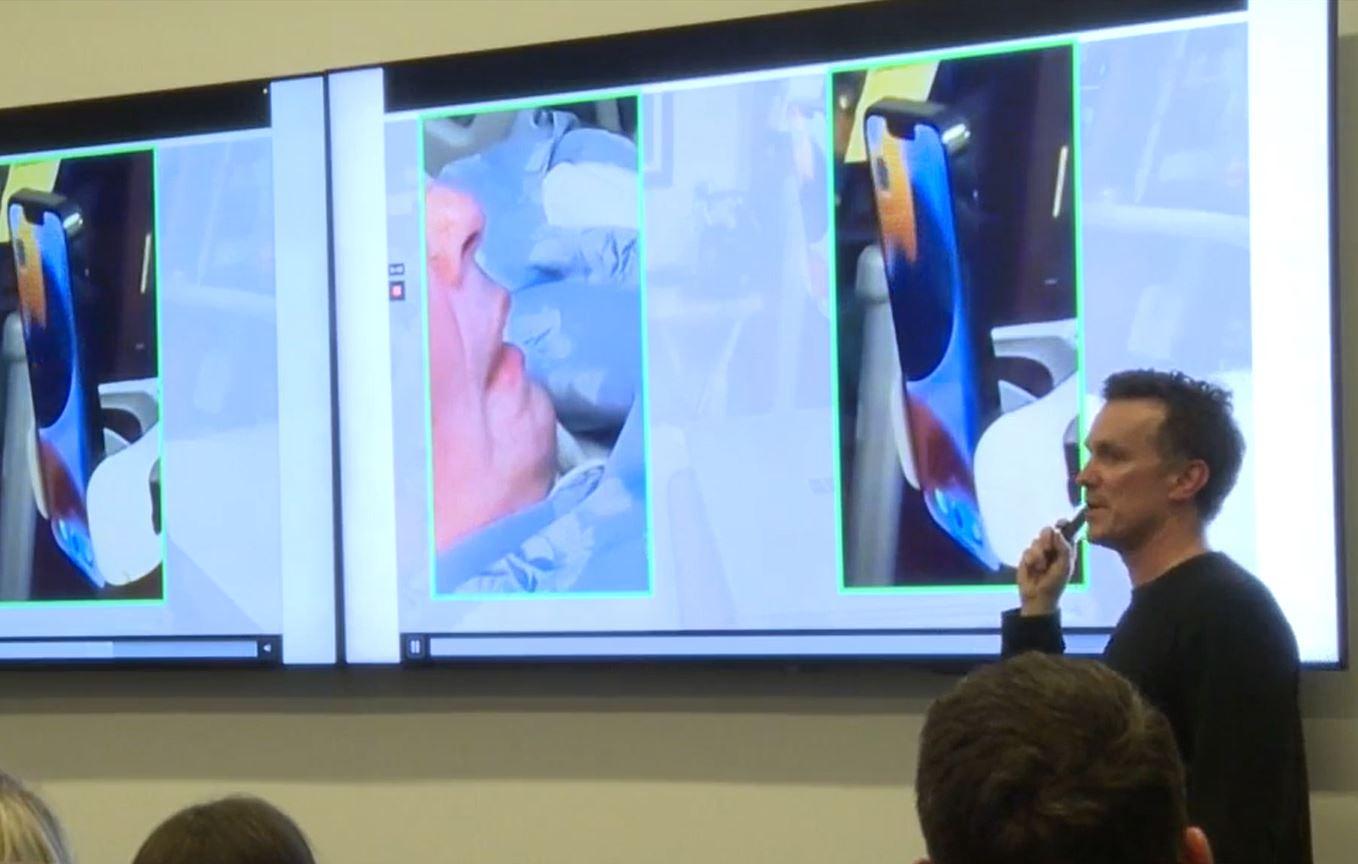
The teams at Kaleida Health’s Gates Vascular Institute and the Jacobs Institute hosted a presentation with the founder and CEO of Synchron, the leading endovascular brain-computer interface (BCI) company developing technology to improve functional independence in patients with severe paralysis.
The March 21 event, targeted to area physicians and clinical staff, marked the beginning of a COMMAND trial at Gates Vascular Institute to explore quantified efficacy measures of the Company’s Synchron Switch technology, an implantable brain-computer interface device designed to help patients wirelessly control digital devices using their thoughts.
Gates Vascular Institute joins Mount Sinai Health System in New York and the University of Pittsburgh Medical Center as the third COMMAND trial site in the U.S.
For eligible local patients who enroll in the trial, the Synchron Switch is implanted within the motor cortex of the brain during a minimally invasive endovascular procedure. Once implanted, the device detects and wirelessly transmits motor intent, restoring a capability for severely paralyzed patients to control personal devices with hands-free point-and-click.
The trial will assess the impact of tasks such as texting, emailing, online shopping and telehealth services.

Dr. Adnan Siddiqui, CEO of the Jacobs Institute; Dr. Amit Kandel, Clinical Associate Professor of Neurology, University at Buffalo; Dr. Tom Oxley, Founder and CEO of Synchron; Dr. Elad Levy, principal investigator and L. Nelson Hopkins III MD Chair of Neurosurgery and Chairman of UB's Neurosurgery Department; Kaleida Health President and CEO, Don Boyd. Photo: @JacobsInstitute. Headline photo: WKBW.