
The Culture Corner is a chance for us to focus on and highlight a specific piece of diversity, equity and inclusion (DEI) work. It is a monthly publication from the DEI Department to facilitate difficult conversations surrounding racism, bias and discrimination with your teams.
“Race is a culturally structured systematic definition of a way of
looking at, perceiving and interpreting reality.”
– Professor Audrey Smedley
Levels of Racism
WEEK 1: Common Understanding of Racism
A common misconception about racism in our country is that racism is limited to personal prejudice and intentional bias in our individual interactions across different races. Another misconception is that being racist is a binary, either-or status: either someone is 100% racist (and therefore “bad”), or 100% not-racist (and therefore “good”). For people who mistakenly think that being racist is a binary status, it can be upsetting to hear that they have said or done something racist.
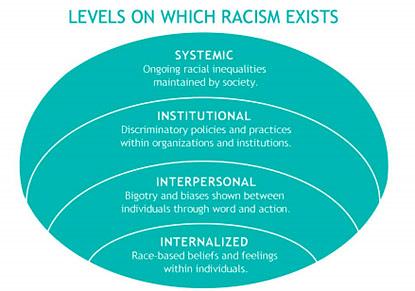
More accurately, racism exists on multiple levels, and includes any policies, actions (including inactions), words and thoughts which result in racially inequitable outcomes, whether malicious intent is present or not. Also, racism is so pervasive within American society that it is very difficult, if not impossible, for anyone who grew up in the United States, including Black, Indigenous, People of Color (BIPOC), to be 100% free of internalized racism. And intentional interpersonal racism between individuals is actually a symptom of a larger system of racism: an array of cultural norms and institutional policies and practices that routinely produce racially inequitable outcomes, often without individual intent or malice.
Change requires an awareness of the levels of racism, a commitment to self-reflection, and a collective will to address people, organizations, and systems to break down barriers that have been built over hundreds of years.
WEEK 2: Read more about the Four Levels of Racism from Race Forward. (2 minutes)
WEEK 3: Watch "Systemic Racism Explained - YouTube" from Act. TV. (4 minutes)
WEEK 4: Check out this short video from Race Forward about the levels and the importance of looking at systemic, not simply individual, racism. (4 minutes)
Questions for discussion:
- Now that you are more aware of the 4 levels of racism, which level do you believe is the most difficult to change? Why?
- What are some examples of systemic racism? Institutional? Interpersonal? Internalized?
- Systemic: Segregation, environmental injustice (Flint Michigan), criminal justice system
- Institutional: Voter suppression, law enforcement, hair restrictions (discrimination based upon hair texture or style)
- Interpersonal: Microaggressions, harassment, stereotypes
- Internalized: Prejudice towards others of a different race; internalized oppression — the negative beliefs about oneself by people of color; internalized privilege — beliefs about superiority or entitlement by white people.
If you are in need of additional support for Culture Corner, please contact the DEI Department by using the DEI Request Form.
Additional Resources