
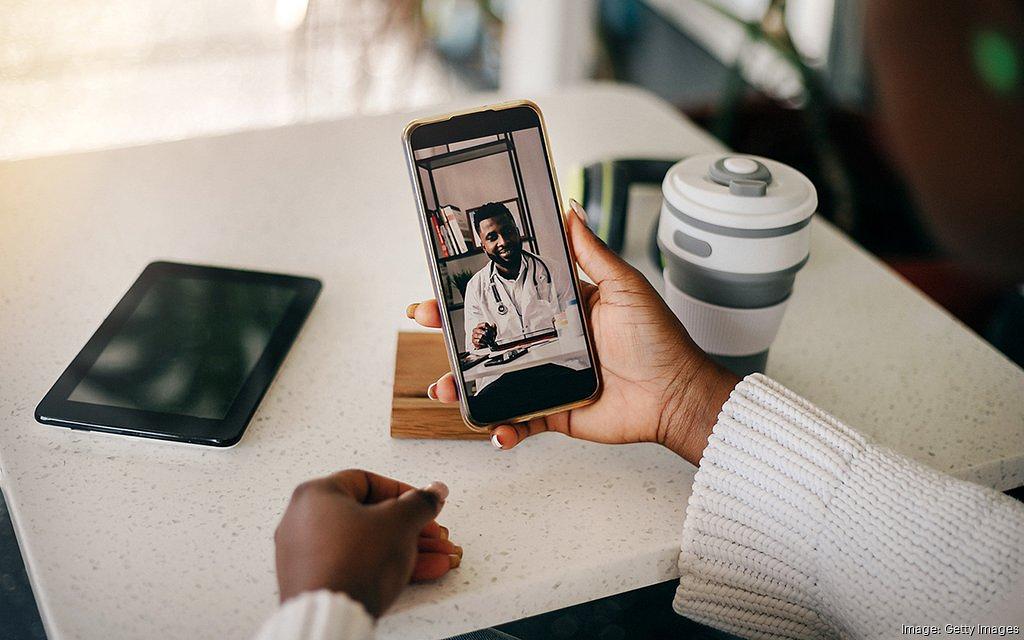
With the rise of telehealth since the Covid-19 pandemic, students at the Jacobs School of Medicine and Biomedical Sciences are learning how to incorporate it into every part of health care, including emergency medicine, behavioral health and substance abuse disorders.
“One of the key aspects to teaching telemedicine is helping students realize you’re still trying to offer patients the best care,” said Dr. Renoj Varughese, assistant professor of emergency medicine at the Jacobs School. “You’re still getting a medical history from your patient and performing certain aspects of the physical exam. We teach students to take advantage of the different resources available to them to reach the same goals.”
For example, if a patient is complaining of abdominal pain during a telehealth appointment, a physician may have a family member press on the patient’s abdomen to see where the pain is, Varughese said.
“We teach students to ask themselves, ‘Are there certain needs I need to meet for this patient that I may otherwise forget?’ ” he said.
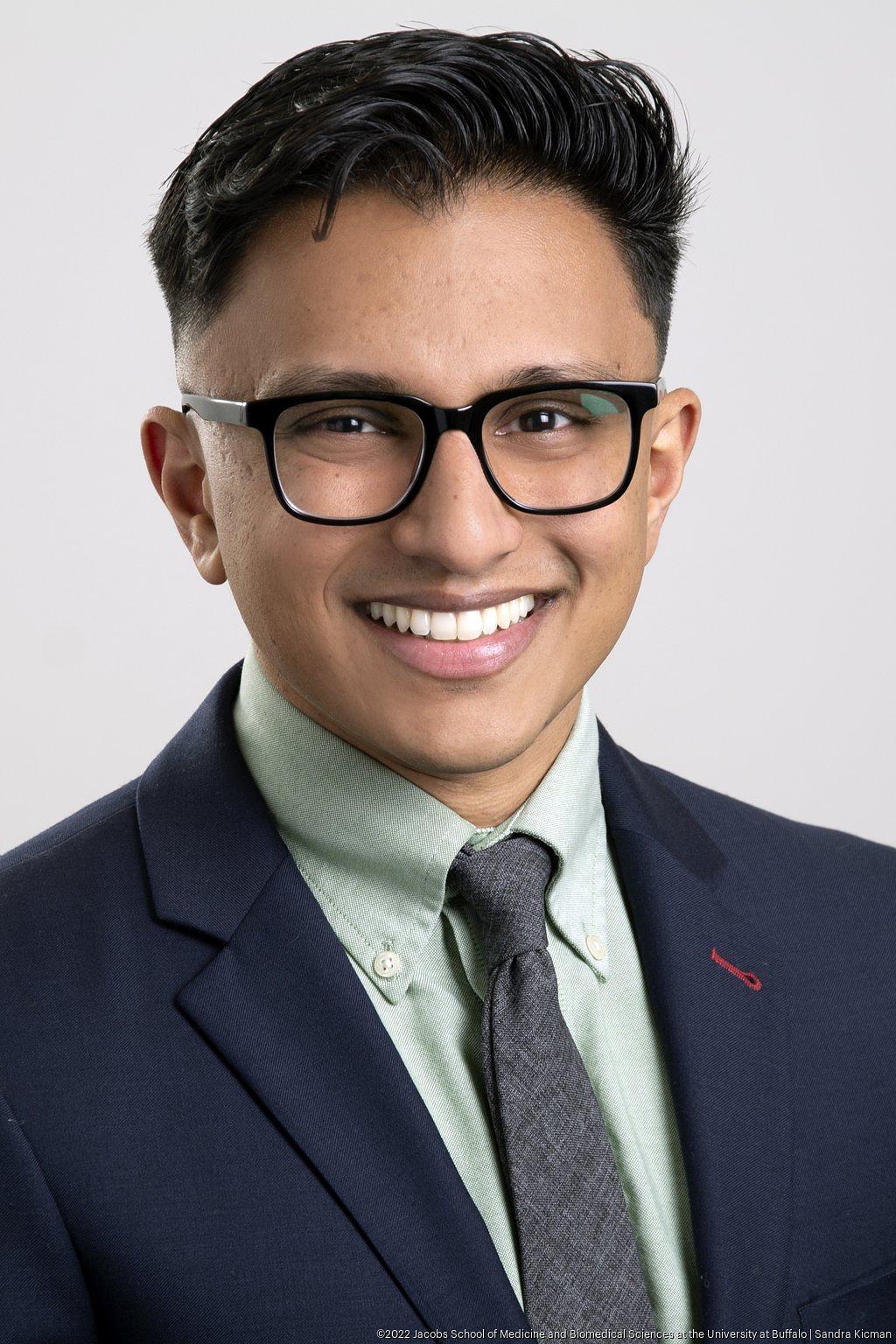 Varughese is a physician in the emergency departments of Buffalo General Hospital, Erie County Medical Center and Veterans Affairs Medical Center. He completed his residency at UB in 2019 with a focused track on emergency medical services and telehealth. During the pandemic, he helped launch Kaleida's and ECMC’s Virtual ER.
“One of the overarching ideas of a virtual ER is to help patients decide if they need to go to an emergency room,” he said. “People will call in and say, ‘I hurt my knee or arm and am not sure if I should go to the hospital.’ In the early stages of Covid, we saw that a lot, because people didn’t want to go to the hospital and risk being exposed to the virus.”
Varughese is also the telemedicine director of Buffalo Matters, a local opioid addiction treatment hotline that connects substance abuse disorder patients with rapid intervention and medication assisted treatment. He said telehealth has taken off in areas of behavioral health and substance abuse disorders, because patients can have the comfort of being in their own home for those appointments.
“Being in an office or hospital is taking them out of their comfort zone,” Varughese said. “Having telehealth options empowers them to be in control of their own health.”
For first- and second-year medical students, a lot of what they learn about telehealth happens in lectures, but the second- and third-year students will gain more hands-on experience with it as they go through their clinical rotations and move on to their residencies, Varughese said.
“The concepts of empathy and being able to relate to your patients is something that’s taught throughout their schooling, and that’s a part of telehealth, too,” he said. “For the most part, there is an aspect of telemedicine in every traditional residency."
He expects telemedicine to continue to grow into more types of medicines and practices over time.
“There’s that component of medicine that is in-person and very different than telehealth interaction with a patient,” he said. “Surgeons are going to do hands-on interventions with their patients. As telehealth grows and becomes easier, their procedure might be in-person, but their follow-ups might be through telehealth. We’ll have to see how telehealth evolves."