
By Tracey Drury – Senior Reporter, Buffalo Business First
Apr 10, 2024
With a physician shortage continuing nationwide, hospitals and physician practices are increasingly relying on physician assistants and nurse practitioners to meet ongoing needs. Now an effort is underway in New York to change how PAs are recognized and what duties they can perform.
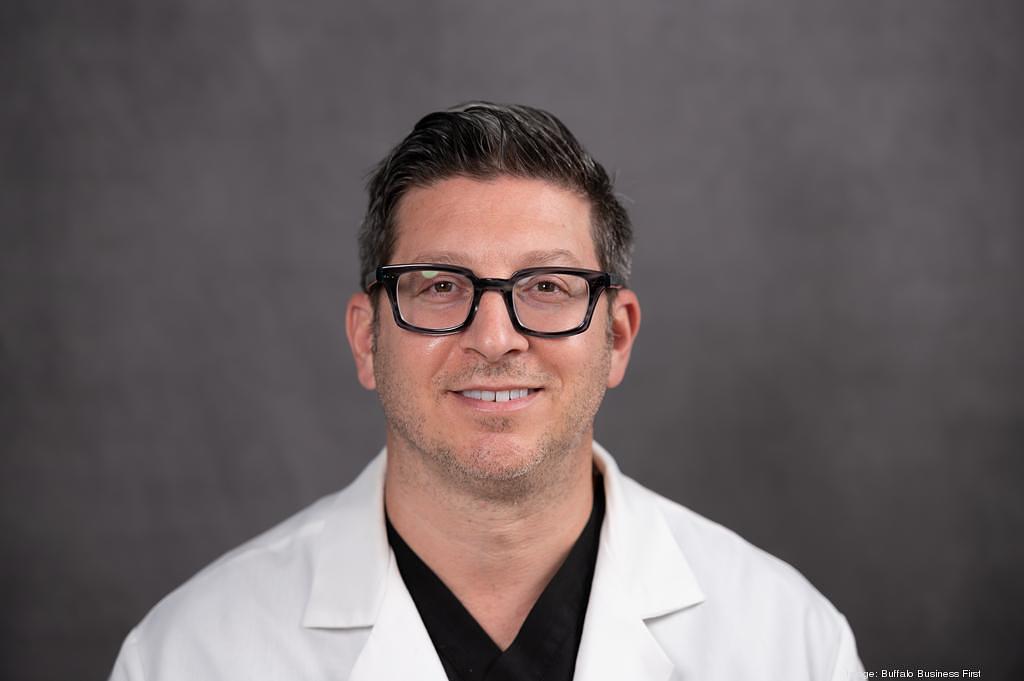
After 25 years in private practice, Dr. Todd Orszulak Jr. made a big change in January when he transitioned his traditional primary care practice in Niagara Falls to a membership model.
It was a major change for the practice, which he runs with his wife Adrienne, and involved losing more than half of the 2,000 patients who were part of the practice to build a base of 280 patients willing to pay an annual out-of-pocket fee for personalized wellness services.
Without making the change, he estimates the practice numbers would have had to double to 4,000 in order to remain sustainable under current value-based reimbursement models with commercial insurers.
“Adrienne and I saw the writing on the wall, especially moving into this year, that to sustain our practice model we were going to have to take on more patients, which ends up meaning less time and less care for the patients,” he said. “The future was looking bleaker on the medicine side. How do you balance that?”
Ongoing shifts in payments and reimbursements are leading to lots of changes for physicians as value-based contracts increasingly replace the fee-based models of the past. Nationwide, solo and smaller physician practices are becoming rare as physicians merge into larger practice groups, sell their practices to hospital groups or move into concierge-style models with companies like MDVIP, the group Orszulak joined.
Practice models of the future
The doctors of tomorrow are learning their businesses could be quite different than how they may have seen it growing up. Dr. Kenneth Snyder teaches a course on health system science to students at the Jacobs School of Medicine & Biomedical Sciences at the University at Buffalo.
He said students are taught doctors are paid in many different ways for the services they provide. But that’s one element, though not the most important, of high-value care.
“It’s so complex because there are so many of them and no one understands what the future holds,” said Snyder, an assistant professor of neurosurgery, radiology and neurology.
Money, he said, is just one piece. Tomorrow's doctors must learn to balance economics with how to enhance patient care, improve population health, reduce costs and maintain physician wellness.
“We’re attempting to educate them on how the systems came about, the incentivized structures that were set up and having them understanding the current payment modes and their pros and cons, as well as understanding how other countries handle health care economics,” he said. “It’s not just about maximizing revenue.”
increased patient loads vs. quality of life
Balancing patient access and the quality of care they’re receiving was one of the reasons Orszulak changed his business model. Adrienne Orszulak, who manages her husband’s practice, points to the move by most payers since the pandemic toward capitated fee schedules, which gives providers a set amount of money per patient per month to cover all health costs.
While $15 per member per month for someone on a low-risk scale could be profitable, the practice would lose money when receiving $17 per month for someone with multiple chronic conditions.
That leads many practices to increase the total patient base, while reducing the length of each visit to squeeze more patients in or bringing in more mid-level practitioners to handle the load. The alternative is caring for patients without getting paid for that time.
“We were looking at a patient base of 4,000 for 2024, an increase of over 120% with no increase in pay,” she said.
While some concierge groups are entirely cash-based, others like MDVIP accept commercial insurance for specific services and specialty visits. The annual fee covers more preventive care services including advanced diagnostic testing and customized wellness plans.
With one physician, one nurse practitioner and two medical assistants, the practice will cap out with about 400 patients.
The fixed costs of the practice have remained the same for factors such as rent, utilities and malpractice insurance, but the staff is smaller. On the revenue side, 80% of income comes from membership fees and just 20% comes through HMO and commercial insurance reimbursements.
The new model gives the Orszulaks better quality of life and the ability to provide better care for their patients, even if there are fewer of them in the practice.
“Our income being significantly more steady allows us to do things quite differently,” she said.
“You don’t go into this model to become rich,” she said. “If you want to make money in medicine, you don’t go into primary care or you run with 10 mid-levels and provide clinic care.”
Chasing economies of scale
Higher reimbursements were part of the goal in 2022 when Sports PT joined MVPT, a large practice affiliated with Cyprus Health Partners with outpatient physical therapy offices across the Northeast. The practice immediately gained more negotiating power through scale, said Kim Attwood, managing partner for the Amherst office.
“We treat on a model of having one-on-one time with PT and the patients, so we need to see patients at a volume that is financially sustainable but also providing excellent patient care,” she said. “Having a higher reimbursement allows us to keep our schedules that way.”
The company has locations on Sheridan Drive in Amherst, Niagara Falls Boulevard in Tonawanda and downtown Buffalo.
“We joined a larger company to really be able to influence health care and the musculoskeletal model,” she said. “We’re trying to have more power to influence the insurers for better reimbursements. Partnering with MVPT gave us more muscle.”
Building innovation and creativity
Other practices are looking at partnerships with other providers – while remaining independent – to maximize reimbursements. Sheridan Medical Group LLP focuses on primary care and has developed wrap-around services with independent providers to bring physical therapy, mental health services and sleep disorders into the practice.
The practice has a relationship with the UB School of Pharmacy that helps patients better manage their medications and avoid pharmacy issues. The goal is to offer preventive measures to help head off more serious, chronic issues that cost more to treat.
Jennifer Carlson, director of clinical development, said the practice is working with researchers on three projects that could bring additional grant revenue into the practice and also uses best practices and negotiated rates as a member of the Primary Care Independent Practice Association.
Put simply, creating a sustainable model within current rate and reimbursement models requires ongoing entrepreneurial and innovative approaches, Carlson said.
“Innovation and creativity is absolutely the name of the game,” she said. “The conventional wisdom is that the path forward is going to be interdisciplinary, building strong relationships … and being equally creative in the ways we manage our businesses and looking at diversifying, not just focusing on what has historically been a heavy overdependence on the payments we get around insurance. We have to find creative ways and use multiple revenue streams.”
But, she said, it’s all still a grand experiment, she said. The costs of administering the practice collaborations and programs aren’t reimbursed under current value-based models. And every few months the practice is presented with new metrics and measures that cause the practice to pivot, retrain staff or set up new workflows.
And that’s with a staff of 35, including three physicians – one full-time and two part-time, plus three mid-level practitioners to care for Sheridan Medical’s patient base of about 4,500 to 5,000.
“It ends up being really costly and there’s nothing in the financial model to accommodate for the costs associated every time we have to shift gears,” she said. “We get paid if we can prove we’ve produced better outcomes, but the rate of reimbursement doesn’t meet the real costs.”