
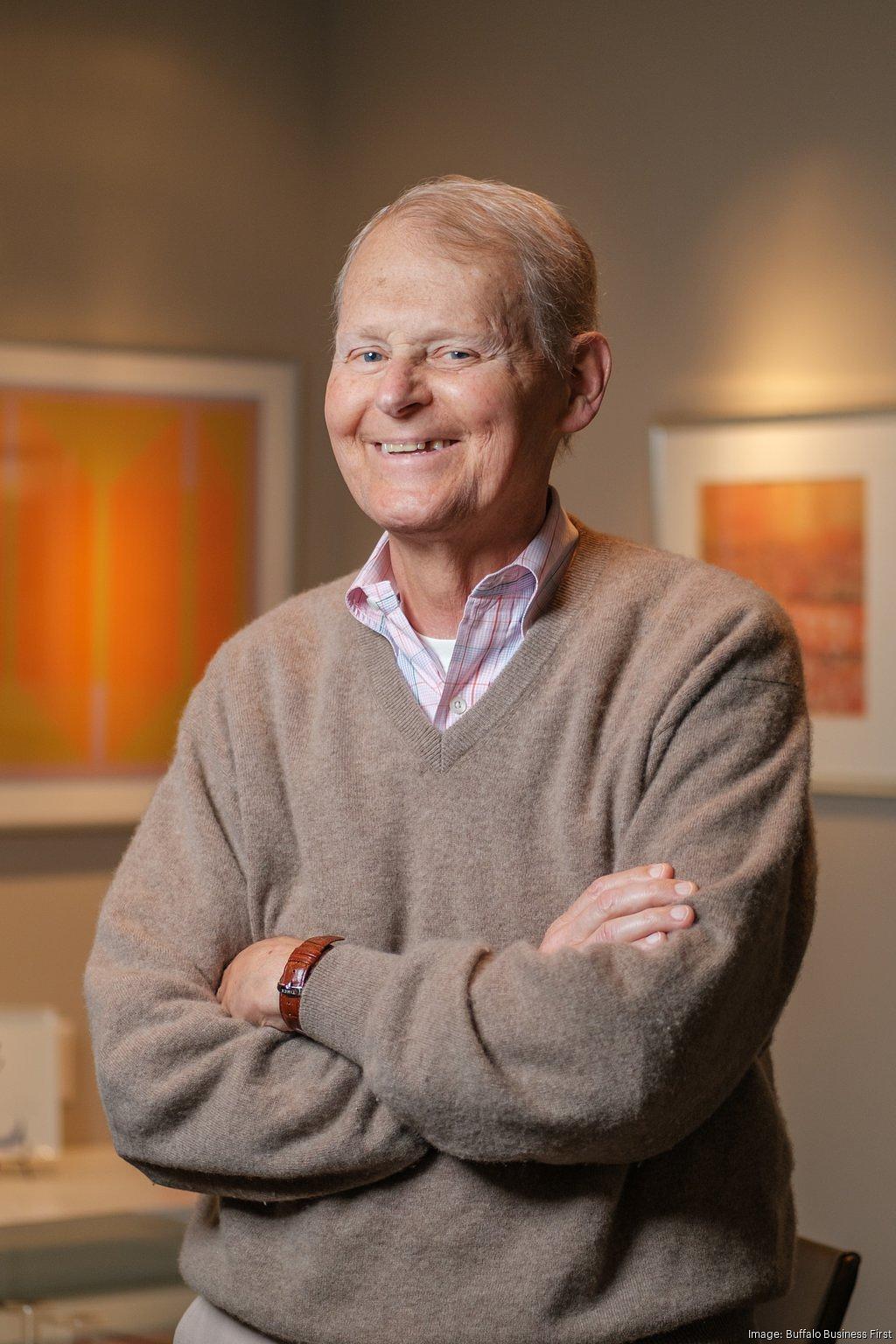
Jacobs Institute founder L. Nelson "Nick" Hopkins died Saturday night at age 81 following a long illness.
Calling him an internationally renowned surgeon would probably be an understatement, considering his reach and legacy in Buffalo and across the world among both patients and the dozens of neurosurgeons whom he trained.
A 2021 inductee into the Western New York Business Hall of Fame, Hopkins brought experts from around the world together to design the Gates Vascular Institute and then recruited the partners to make the Jacobs Institute and GVI a reality.
The institute opened in 2012 on the fifth floor of the 10-story, $291 million facility that also houses the emergency department for Buffalo General Medical Center, Gates Vascular Institute and research and development labs for University at Buffalo.
Hopkins, a pioneer in the field of endovascular neurosurgery, chaired the department of neurosurgery at the UB School of Medicine & Biomedical Sciences from 1989-2013. At the same time, he led UB Neurosurgery, chaired the Gates Vascular Institute, helped to foster the creation of the Toshiba Stroke & Vascular Research Center and served as president/CEO of the JI and its Center for Innovation in Medicine.
He saw the Jacobs Institute as the meat in the sandwich that would connect research and ideas developed by UB’s Clinical and Translational Research Center tied to stroke, cardiac and vascular care to clinicians that could – and have – develop techniques and devices to improve treatments delivered by Kaleida Health’s GVI.
In a 2021 interview with Buffalo Business First, Hopkins said his novel ideas like using stents and balloons to treat clots in the brain – once seen as wild and unrealistic by his peers and now standard treatment in the field – go back to his earliest days in training.
“I got the notion that putting catheters in people’s heads in the late '60s and early '70s when I was in training, figuring it might be a better way to treat vascular problems,” he said. “It was during my neurosurgery training I got this bean-brain idea of how catheters could potentially revolutionize the treatment of vascular diseases in the base of the brain through neurosurgery.”
He was also known for his demeanor and dedication to the region, as well as training up and coming surgeons, said Don Boyd, CEO at Kaleida, in an email note.
"Beyond his technical expertise, Dr. Hopkins was selfless, generous and lifted those around him up so they could see their own greatness and potential," he said. "Dr. Hopkins’ loss will be felt deeply by his family, colleagues and the global medical community. His legacy will long live on through those he treated, taught and inspired."
Dr. Elad Levy, co-director of Kaleida’s Gates Stroke Center who trained under Hopkins, told Buffalo Business First just how unorthodox those ideas were when Hopkins presented them at conferences.
“The comments were: ‘You and Dr. Hopkins are cowboys’ and ‘If we had tomatoes, we would throw them at you,’ ” he recalled. “This was a comment said to me while I was on stage.”
Another longtime colleague and student under Hopkins was Dr. Adnan Siddiqui, vice chairman of the neurosurgery department and chief medical officer at the Jacobs Institute, started following Hopkins’ work early in his own career, beginning in the early 1990s. Hopkins, he said, was more than a teacher and mentor.
“Most neurosurgeons tell you exactly what’s on their minds, but Nick is not like that. He really builds you up and gradually, gently molds you to make you much, much better and at the same time never taking anything away, always giving,” Siddiqui said. “Every credit he gets, he gives it to his team. He molded us in different directions so we all work effectively as a team and yet have room to grow. Neurosurgeons are almost always lone wolves, so for him to create this culture in Buffalo, that’s what makes UB Neurosurgery and Gates Vascular Institute unique.”
Dr. Allison Brashear, dean of the medical school and vice president for health sciences at UB, said in a message to the UB community that Hopkins' was dedicated to mentoring the next generation.
"His guidance, expertise and passion inspired countless students and residents, shaping them into skilled and compassionate professionals," she said.
His son, Bob Hopkins, posted about his father in a LinkedIn post this afternoon, calling him an incredible human being and an incredible father.
“His unwavering optimism, his unique ability to see what’s possible, and his willingness to take risk and act allowed him to become the pioneering endovascular neurosurgeon, entrepreneur, mentor and friend we all loved,” Bob Hopkins said. “His impact on the world of stroke intervention and the treatment of neurovascular disease cannot be understated. His willingness to push the envelope and do hard things saved countless lives. Telling him something could not be done was almost a guarantee that it would get done.”