
By Tracey Drury – Senior Reporter, Buffalo Business First
Jun 13, 2024
What's the best reuse for former hospital campuses?
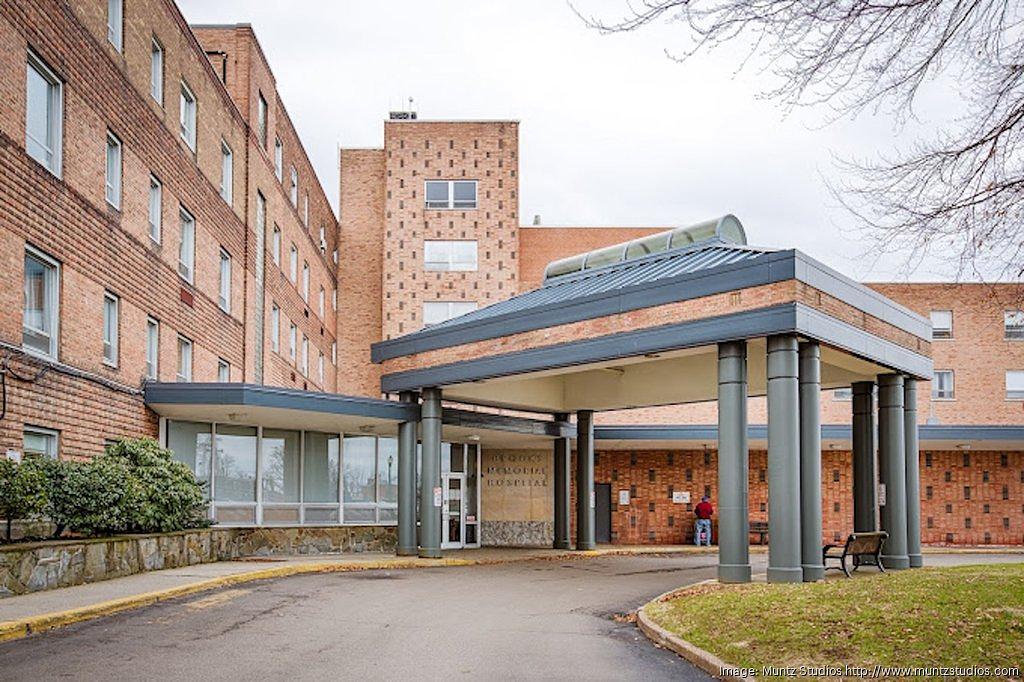
That's the question being asked in Dunkirk after a recommitment by the state to release funds to build a replacement hospital for Brooks Memorial Hospital.
It's the same question that's faced several other communities across Western New York, and it's also a problem for hospital systems across the nation. Nearly 200 rural hospitals have closed over the past two decades due to shifting population patterns, financial challenges and changing health care models.
Locally, Brooks will join three other closed sites that are currently available:
• DeGraff Memorial Hospital closed its inpatient tower in December 2019, marketing the five-story, 85,000-square-foot building for reuse as multi-family, senior housing or social services. Kaleida Health still operates an emergency department and outpatient services at the building.
• TLC Lakeshore Health Care Center in Irving, also owned by Brooks-TLC Hospital System, closed in early 2020. The 30-acre property includes a 172,381-square-foot-hospital. A new deal was signed this spring after a previous deal fell apart with Gotham Asset Holdings LLC.
• Eastern Niagara Hospital closed its Lockport site last June after several years of bankruptcy. After a deal with a potential buyer fell through in January, creditors are now trying for a second time to auction off the 5.83-acre campus online.
Brooks Memorial Hospital will join the list when the new $74 million, 93,500-square-foot micro-hospital in Fredonia opens in a few years. Brooks-TLC has already agreed to transfer ownership of the 180,000-square-foot Dunkirk site to the Dunkirk Local Development Corp. to ease redevelopment.
Ken Morris, president at Brooks-TLC, said finding a new use for a former hospital property is challenging.
“You have to find the right investor and developer that wants to take on an aged facility,” he said. “It’s a pretty significant investment for the parties to come in and for them to be able to have a vision that is supported not just by what they intend to do but also by the local community and meets their needs as well.”
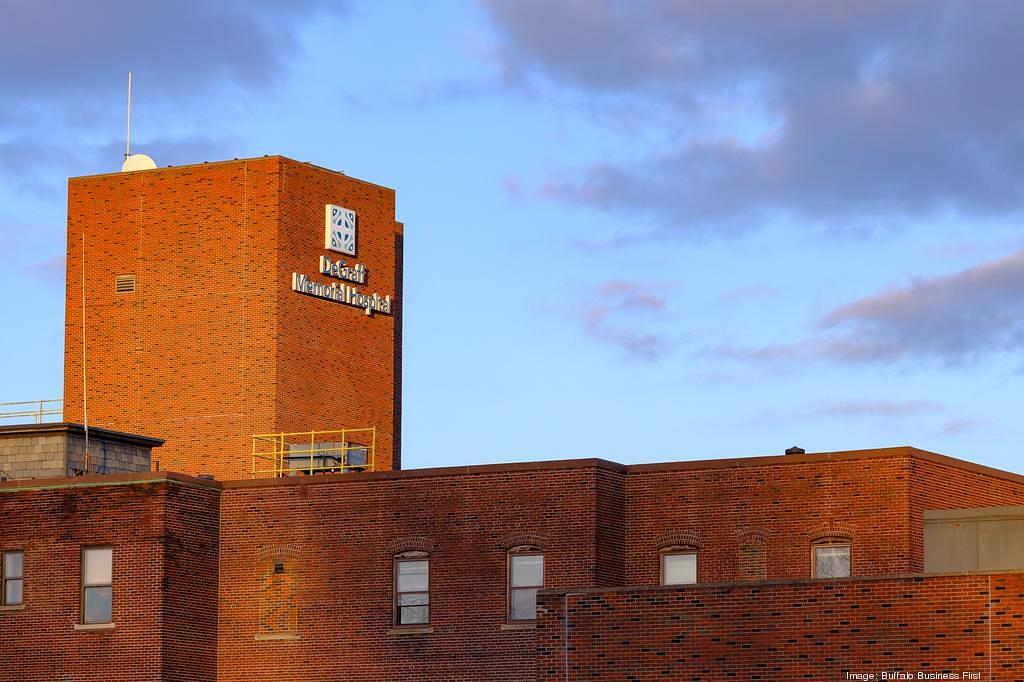 Mike Hughes, senior vice president and chief administrative officer at Kaleida Health, said the system continues to have conversations with potential partners in the community about opportunities for the DeGraff tower, which remains adjacent to a functioning emergency department and outpatient services.
“It’s a unique opportunity because it is connected to current operations, so it has to fit programmatically,” he said.
Past successes have shown it’s certainly possible. He pointed to the former Lafayette Hospital redeveloped by Ellicott Development 25 years ago; as well as the ongoing development by Canterbury Wood, TM Montante Development and Belmont Housing at the former Millard Fillmore Gates Circle Hospital campus; and efforts by Sinatra & Co. and Ellicott Development at the former Women’s and Children’s Hospital of Buffalo.
Another example: The former Columbus Hospital on Niagara Street was redeveloped twice and now operates as Neighborhood Health Center’s Mattina Center.
“Those are challenging projects – just look at the past 10-15 years,” Hughes said. “It depends on who redevelops those properties.”
The new deal for TLC Lakeshore calls for redevelopment as a chemical dependency and addictions care facility, something the new buyer has experience with in other markets. That fits well with the hospital building, which was running a 20-bed addictions unit before its closure.
The Brooks Memorial site offers different opportunities for buyers, partly because of its location in the City of Dunkirk and proximity to more businesses as well as the lake: Some upper offices include a waterfront view.
“People want to be close to the lake, and we’re a stone’s throw away from it,” Morris said. “It is a more densely populated area but also in the City of Dunkirk with other businesses around it that would support potential housing opportunities or any other type of mixed-use occupancy.”
The hospital system will work in tandem with the DLDC, Morris said.
“The intent is for both of us to try to advocate for this location, find local developers or regional or national developers – whatever it takes,” he said. “Rural health care is a challenge, not just in the state of New York but nationally. So trying to reinvest in a property when historically it has struggled previously is challenging.”