
by Jon Harris
September 12, 2022
Joined by more than 1,000 health care workers outside Buffalo General Medical Center on Aug. 18, union leader Cori Gambini didn't dance around the question she kept hearing in the community as labor negotiations continued with Kaleida Health.
"People keep asking me, 'Cori, are you guys going to strike?'" she said, among cheering union members dressed in red and purple. "My answer has been consistent: We want to reach an agreement with Kaleida Health – whether we strike or not is in the hands of Kaleida."
More than three weeks later, about 6,300 Kaleida union workers will vote Tuesday, Wednesday and Thursday on whether to give their bargaining committee the authority to call a strike if negotiations stall or tensions escalate. If members vote in favor of authorizing a strike – as is widely expected – it doesn't mean a strike will happen immediately, or happen at all for that matter. But if a strike is called, the unions must give Kaleida 10-day notice, allowing the health provider to initiate a plan to ensure patient care or transfers.
The vote, however, could provide the unions' 50-person bargaining committee with leverage. Kaleida officials, meanwhile, say a strike authorization vote is often part of the bargaining process, noting it is already well aware of the importance of these negotiations.
Both sides hope they can avoid a strike, which is likely still weeks away if it were to happen.
But if such a strike occurred?
It could be far more disruptive than the walkout at Mercy Hospital in South Buffalo last fall.
Larry Zielinski, a health care administration expert at University at Buffalo and a former Buffalo General president, said he believes a contract settlement will be reached without a strike. While he's not involved in the talks, he said Kaleida will likely have to "come to the rationalization that they have to pick between" the lesser of two economically crippling options.
"To me, it comes down to: You have an economic cost regardless," he said. "And the strike is an economic cost you're going to deal with immediately and with severe disruption. Settling a contract will be expensive, but the cost will be spread over the length of the contract."
Here's what to expect next as these negotiations continue:
Where does bargaining stand?
Kaleida and the two unions, Communications Workers of America Local 1168 and 1199SEIU United Healthcare Workers East, have been bargaining since mid-March, with the previous contract expiring July 31 after two monthlong extensions.
This is the longest the Kaleida talks have dragged on in recent memory, a bargaining battle between exhausted health care workers and a health system with a deteriorating bottom line.
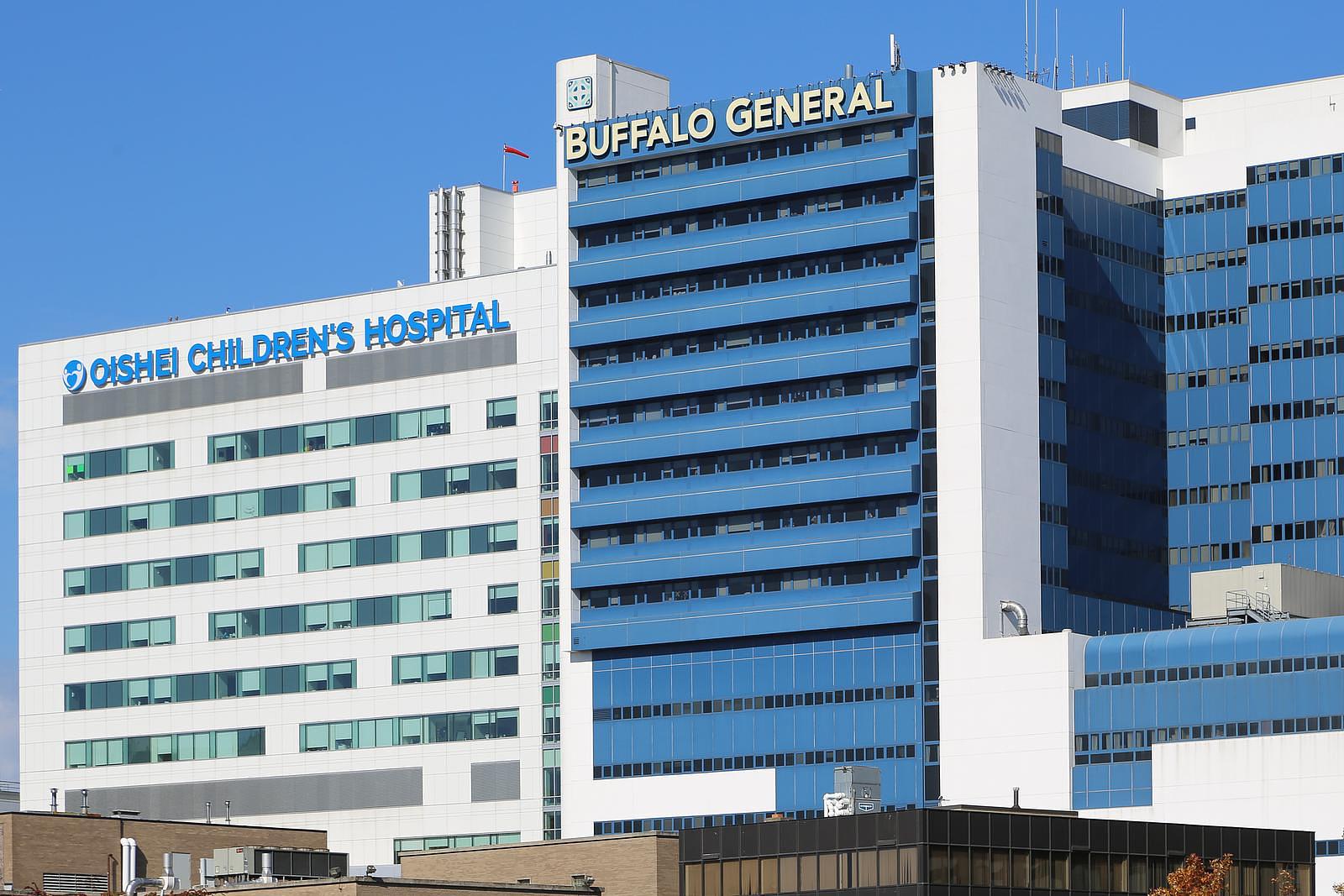
Staffing and wages remain major unresolved issues – and not just for nurses. The contract being negotiated also covers dietary workers, personal care attendants, service and maintenance workers, among many others, across several Kaleida facilities, including Buffalo General, Oishei Children's Hospital, Millard Fillmore Suburban Hospital, HighPointe on Michigan, DeGraff Medical Park and various clinics. All told, about 63% of Kaleida's payroll is involved in these talks.
"Staffing is still a huge piece," said James Scordato, 1199SEIU's vice president of the Western New York hospital division. "We have an entire staffing proposal that we have not come to an agreement on. Again, like I've said earlier, we've made strides. There are areas where we think staffing needs to be improved."
Kaleida Chief Administrative Officer Mike Hughes said Kaleida has exchanged economic proposals with the union, but they "are still quite far apart."
Kaleida's current offer, which includes wages, benefits and staffing commitments, would cost about $200 million over three years and make it the market leader in Western New York, Hughes said. By comparison, the prior three-year agreement reached in 2019 cost $85 million.
"We will continue negotiating in good faith until we can reach an agreement," Hughes said. "We are committed to do all that we can to achieve a fair contract that rewards our current employees, helps attract new staff and puts Kaleida Health in a strong position going forward."
Scordato said what's on the table now would not get ratified by union members. But, he said, once the two sides "come to a better understanding" on a few key items, he believes they could wrap things up quickly.
"That's where we get into bargaining 15-18 hour days to get it done and to wrap it up," he said. "So that's what our schedules will probably turn into."
They're not there yet, but they continue to bargain five days a week.
What comes next?
While progress is being made, bargaining was slow last week as the two sides handled open grievances, settled arbitration cases and tried to hammer out some issues.
For the unions, a lot of time was spent preparing for the strike authorization vote, working the phones and keeping members informed.
After three days of voting, Gambini, the CWA Local 1168 president, expects the unions could tally and announce the results by 10:30 p.m. Thursday.
A meeting with Kaleida will follow Friday, with bargaining expected to continue.
What if they do strike?
Union officials have said a strike remains a "last resort." And it's unlikely they would immediately issue a 10-day notice to Kaleida after votes are tallied.
But such a strike, if it were to happen, would be significant, with the potential to cause much more disruption to Western New York's health care industry than the nearly six-week strike at Mercy Hospital.
That's because, unlike an agreement at Catholic Health System that specified a strike could only happen at Mercy, Kaleida has no such assurances if a strike is called.
A strike authorization vote does not mean a strike is inevitable, Hughes stressed. In fact, a strike authorization vote was held at Kaleida on June 28, 2011, the same day a two-year tentative agreement was announced. Then in 2013, votes were taken from June 10-12, and a tentative three-year deal was reached June 20.
But the health system is still taking measures to ensure it can offer care in the event a strike occurs.
Kaleida has engaged Michigan crisis staffing firm Huffmaster "to validate its plans," Hughes said. Huffmaster was the same firm that Catholic Health used during the Mercy strike.
In addition, Kaleida is in contact with the state Health Department to review the system's contingency plans.
"We hope that those measures will prove unnecessary, but it is critical that we have contingencies in place for the sake of our patients," Hughes said.
Kaleida officials estimate a strike would cost it $23 million a week just for replacement staff, further eroding its financial condition.
Erie County also is preparing for a potential Kaleida strike.
County Health Department spokesperson Kara Kane said the county's Emergency Medical Services has been in contact with ambulance services and that public safety answering points are prepared to coordinate and communicate hospital statuses. Right now, she mentioned, Emergency Department census is taken every six hours, but the county is prepared to start checking that every two hours if there is a disruption.
Zielinski, the UB health care administration expert, said if the union does strike, he would anticipate a more tactical approach of a location or two rather than a systemwide walkout. For example, a strike at Millard Fillmore, Zielinski said, could have a major effect on Kaleida because that hospital has a more profitable payer mix of commercially insured patients rather than those on Medicaid and Medicare.
"I'm speculating here but I doubt, for example, that the union would ever strike at Children's Hospital because that would obviously not be perceived well by the community," he said. "But I could certainly see picking high-visibility sites like Buffalo General and the Gates Vascular Institute."
But in the end, Zielinski believes – and the community hopes – the two sides can reach a settlement before a walkout occurs.
And once they do settle, Kaleida and the unions can ramp up their joint call to Albany to request more funding for cash-strapped hospitals across the state.
"Then I believe there's going to be more pressure put on Albany to effect some sort of funding stream to help these health systems," Zielinski said.