
Jon Harris Jul 13, 2022
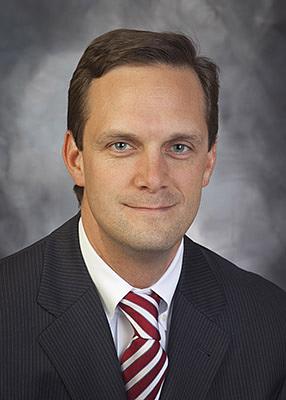
Donald Boyd has spent nearly his entire career at Kaleida Health and, over the last 25 years, has risen through the ranks of Western New York's largest health system.
Now, after working in roles from ambulatory services to a stint as a hospital president and then a decade leading business development efforts, it's time for the 50-year-old to take the big job as CEO.
"He's been through all of Kaleida's twists and turns," said Larry Zielinski, a health care administration expert at University at Buffalo and a former Buffalo General Medical Center president. "Like all health system executives, he's going to have enormous challenges facing him."
Enormous indeed.
Consider: Kaleida is in the midst of high-stakes negotiations with unions that represent about two-thirds of its roughly 10,000-person workforce – employees who want improved staffing and who closely watched the Mercy Hospital strike in the fall at rival Catholic Health System.
Want more pressure? Throw on stinging financial effects from the pandemic, forcing the health system to spend millions on travel workers to fill staffing gaps.
As a cherry on top: Health care is a rapidly changing industry, shifting to value-based and preventative care – which, historically, has not been a hospital system's bread and butter.
Given these ongoing challenges, the late-in-the-day announcement Tuesday from Kaleida that named Boyd the CEO to succeed Bob Nesselbush, 57, shocked many in the Western New York medical community.
The announcement said Nesselbush was retiring – something that had never been hinted at publicly – after roughly 18 months in the CEO post and just over three years with Kaleida.
Gary Crosby, the newly elected chair of Kaleida's board of directors, said in a statement that Boyd is "the right person" to move the organization forward as it navigates choppy waters. Crosby did not return a call seeking further comment Wednesday.
Zielinski, who has known Boyd for 20 years and calls him smart, hardworking and personable, said it is nice to see someone work their way up "the old-fashioned way."
"I'm sure he's very happy, but my guess is he didn't sleep well last night," Zielinski said.
Major labor talks
Boyd's most immediate challenge is settling contract negotiations with Communications Workers of America Local 1168 and 1199SEIU United Healthcare Workers East, which represent about 6,300 Kaleida workers – a figure that would be north of 7,000, the unions say, if all open jobs were filled.
The two sides have, so far, agreed to two 30-day contract extensions, the most recent of which runs through the end of July.
But the clock is ticking.
CWA Area Director Debbie Hayes said the unions have a significant staffing proposal on the table and last week presented their economic package to Kaleida. Talks have moved along slowly since beginning in mid-March, now entering the difficult topics such as wages, benefits and staffing.
While union leaders said the timing of the CEO switch is not ideal during contract talks, Hayes and others noted Boyd has been a regular at the bargaining table. Hayes called him a "consistent, active participant in negotiations" and told him in a conversation Tuesday that she hopes the time he has invested in the process will lead to a solid agreement.
"I just hope that the change in leadership positions at Kaleida does not have an adverse effect on contract negotiations as we try to wrap this up," Hayes said.
A contract settlement at Catholic Health last fall, following a nearly six-week strike at Mercy Hospital in South Buffalo, set the bar for negotiations at Kaleida by hammering out benchmarks for staffing levels. That means the pressure is on Kaleida to match, or exceed, the Catholic Health contract.
And, unlike an agreement at Catholic Health that specified a strike could only happen at Mercy, Kaleida has no such assurances if negotiations were to stall and labor action was threatened.
Hayes said how contract talks get resolved "is going to set the tone for what happens at Kaleida over the next several years."
Financial pressure
Many hospitals across the country are facing financial troubles.
Hospitals are struggling to discharge patients into nursing homes and other settings, which have decreased their bed count to adjust for staffing challenges. That means certain patients are staying longer in hospital beds, creating backlogs in the emergency department. Rather than wait, some patients opt to leave without being seen – taking their reimbursable visit to another setting, such as an urgent care center.
Meanwhile, expenses are rising: Amid staffing challenges, wages have increased to recruit and retain workers. And hospitals continue to shell out big money for travel workers.
"Every health system in Western New York is facing cash issues, and that issue was not as prevalent prior to Covid," said Thomas J. Quatroche Jr., president and CEO of Erie County Medical Center. "This is 100% Covid-related."
Kaleida Health and its affiliated Upper Allegheny Health System, which includes Olean General Hospital and Bradford (Pa.) Regional Medical Center, logged nearly $230 million in pandemic-related losses from lost revenue and incremental expenses such as premium pay, surge staffing and personal protective equipment, according to a lawsuit Kaleida filed this year against its insurance company.
That missed revenue and higher expenses translated to deficits on the bottom line in 2020: about $61 million for Kaleida and $5.4 million at Upper Allegheny, according to the most recent annual reports filed with the IRS.
Kaleida also lost $18 million in 2019, which broke a streak of five straight profitable years.
Quatroche, who has known Boyd for 16 years and started working more closely with him once Kaleida and ECMC became partners in Great Lakes Health System, said Boyd is a strategic person who understands where health care is headed.
"I think Don's up for the challenge," he said. "He's got a very cool head. He understands the market."