
By Tracey Drury
Buffalo-area hospitals can lay claim to a series of innovations over the last 50 years, ranging from developments that led to the first tests for prostate cancer to new methods for treating blood clots and stroke. Today, the region’s physician researchers and clinicians continue to innovate and come up with new ways to treat disease, develop new devices and equipment and create novel ways to deliver care both inside and outside hospitals. This story is part of a package looking at examples of innovation at some of the largest Western New York health systems.
A new procedure at the Gates Vascular Institute at Buffalo General Medical Center is giving heart patients a new shot at life.
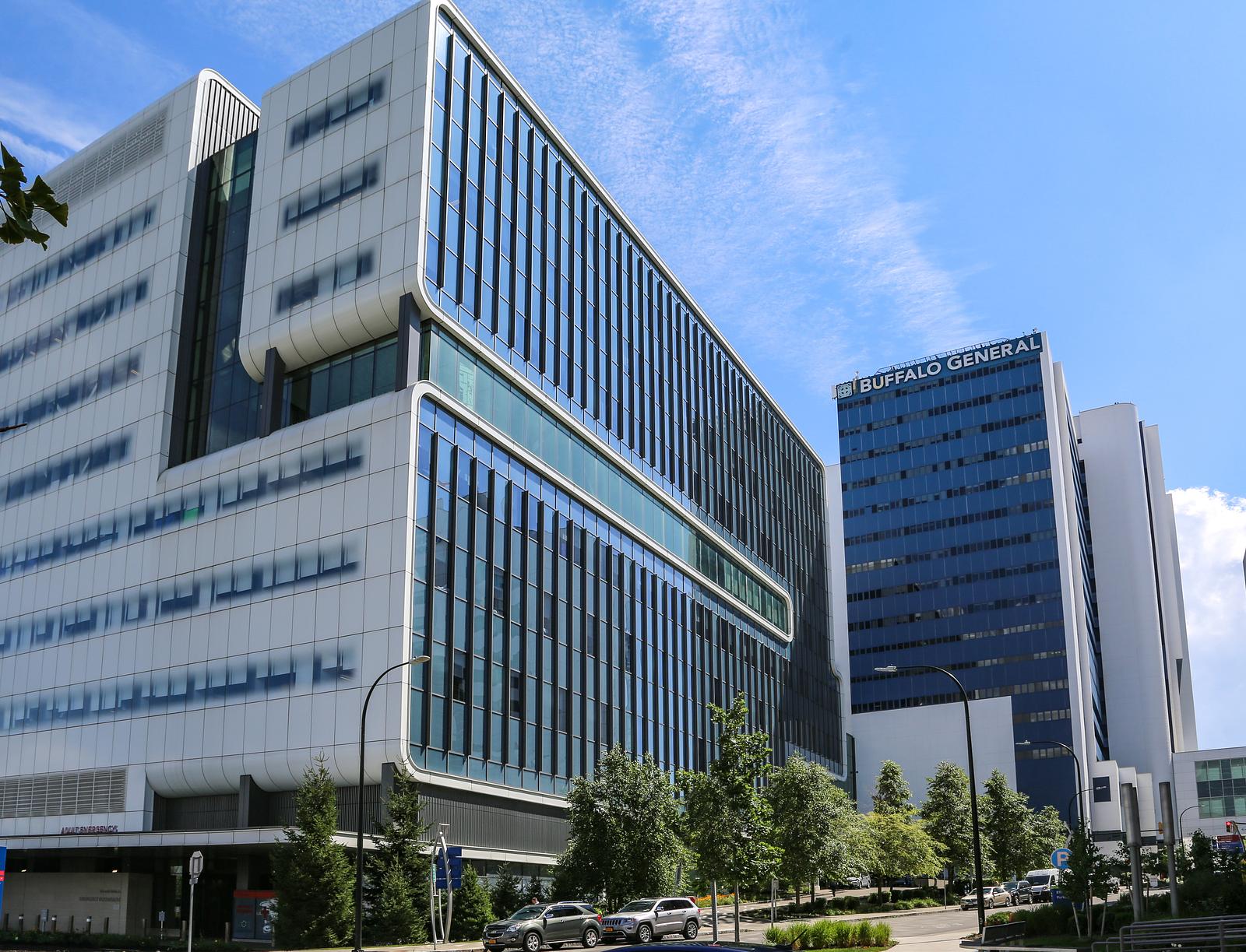
The downtown hospital is the first between Cleveland and Manhattan to offer the pulsed field ablation system by Farapulse for patients with atrial fibrillation under Dr. Chee Kim and Dr. Ashish Bhatia, electrophysiologists with General Physician P.C. They say the procedure literally has revolutionized the standard treatment protocol.
“These sorts of technologies only come around every 20 years,” Kim said. “That’s how revolutionary this is.”
Traditional ablation treatments use extreme heat or cold cryo-ablation to treat damaged heart tissue. Farapulse – launched in March –uses tissue-sensitive electrical fields to minimize damage to surrounding healthy tissue and organs. It’s also appropriate for most AFib patients.
“There’s no collateral damage and the effects of the ablation are much more effective and long-lasting,” said Kim, director of electrophysiology innovation and clinical integration at the GVI and the Jacobs Institute. “In the past, it was non-specific, so whatever surrounding organs there were at risk for damage. It could damage the nerve to the diaphragm or to the esophagus, which sits right behind the heart and would have potentially lethal complications.”
Kim trained at the University of Rochester and worked at Strong Memorial before coming to Buffalo to join Erie County Medical Center in 2002. He joined Buffalo General full time in 2013.
Affecting 10% of the world’s population over age 80, AFib is the most common type of heart arrhythmia and is among the most common causes of stroke. It also can affect patients with congestive heart failure, cardiomyopathy that requires a pacemaker and implantable defibrillators.
The Farapulse therapy from Boston Scientific uses pulsed field ablation that provides a precise, specific pulse of electricity that damages or kills the bad cells affecting the heart’s function while leaving no collateral damage. It’s also a quicker procedure – 30 to 40 minutes versus 90 to 120 minutes. Bhatia, director of the atrial fibrillation center at the GVI, said he’s gone from doing one or two ablations a day with the traditional treatment to five per day. Bhatia trained as an electrophysiologist at University of Virginia at Charlottesville, then joined Buffalo General in 2007 to help launch one of the country’s first centers to focus exclusively on atrial fibrillation. But even with that specialty, it was tough to get success rates over 70% and many patients still required repeat procedures. With Farapulse, clinical data from Europe show success rates approaching 85-90%. “I’ve been doing this for 20 years and never had anything that was such a marked improvement from what we used to do,” he said. “The No. 1 goal is getting rid of A-Fib for them and this is the best shot we’ve had in ages.”