
By Tracey Drury – Reporter, Buffalo Business First
Oct 7, 2022
Dr. Adnan Siddiqui was taking a break from work, sitting at a table in one of the communal areas at the Gates Vascular Institute when he struck up a conversation with Dr. Vijay Iyer, an interventional cardiologist.
Siddiqui, a neurosurgeon, says Iyer was struggling to figure out how to treat a patient who needed an aortic valve replacement but he couldn’t find a good access point through the chest. Siddiqui suggested going in through the carotid artery in the neck.
“He said ‘I didn’t think that was possible’ and I said, "why not?' said Siddiqui, CEO of the Jacobs Institute and director of neurological stroke services for the GVI. "Now when there is no good access from the leg, they routinely go through the carotid to get to the heart.”
Another time, Siddiqui was treating an abnormal blood vessel in the brain and the risk of major bleeding was severe. He typically would have given the patient a drug to temporarily stop the heart. But Iyer suggested a pacemaker instead, which Siddiqui didn’t think was possible. Now that’s become standard practice too.
“There are so many examples of that, just an incredible amount of advances that have taken place because of the collisions that happen as a routine course of the day," Siddiqui said.
Siddiqui, a neurosurgeon, didn’t know many cardiologists a decade ago when he was working in the former Millard Fillmore Gates Circle Hospital. That was before the neurology and cardiovascular services lines under Kaleida Health and Erie County Medical Center came together at the Gates Vascular Institute in 2012.
As the facility marks its 10th year in operation, leaders say the center has surpassed expectations for enabling new procedures and novel treatments and innovating ways to treat patients.
First opened in March 2012, the GVI brought together researchers, surgeons, physicians and a range of other clinicians specializing in cardiac, stroke and vascular disease. It was the brainchild of neurosurgeon Dr. Nelson Hopkins, who predicted the GVI would revolutionize how people are treated for heart and neurological disorders.
International visibility
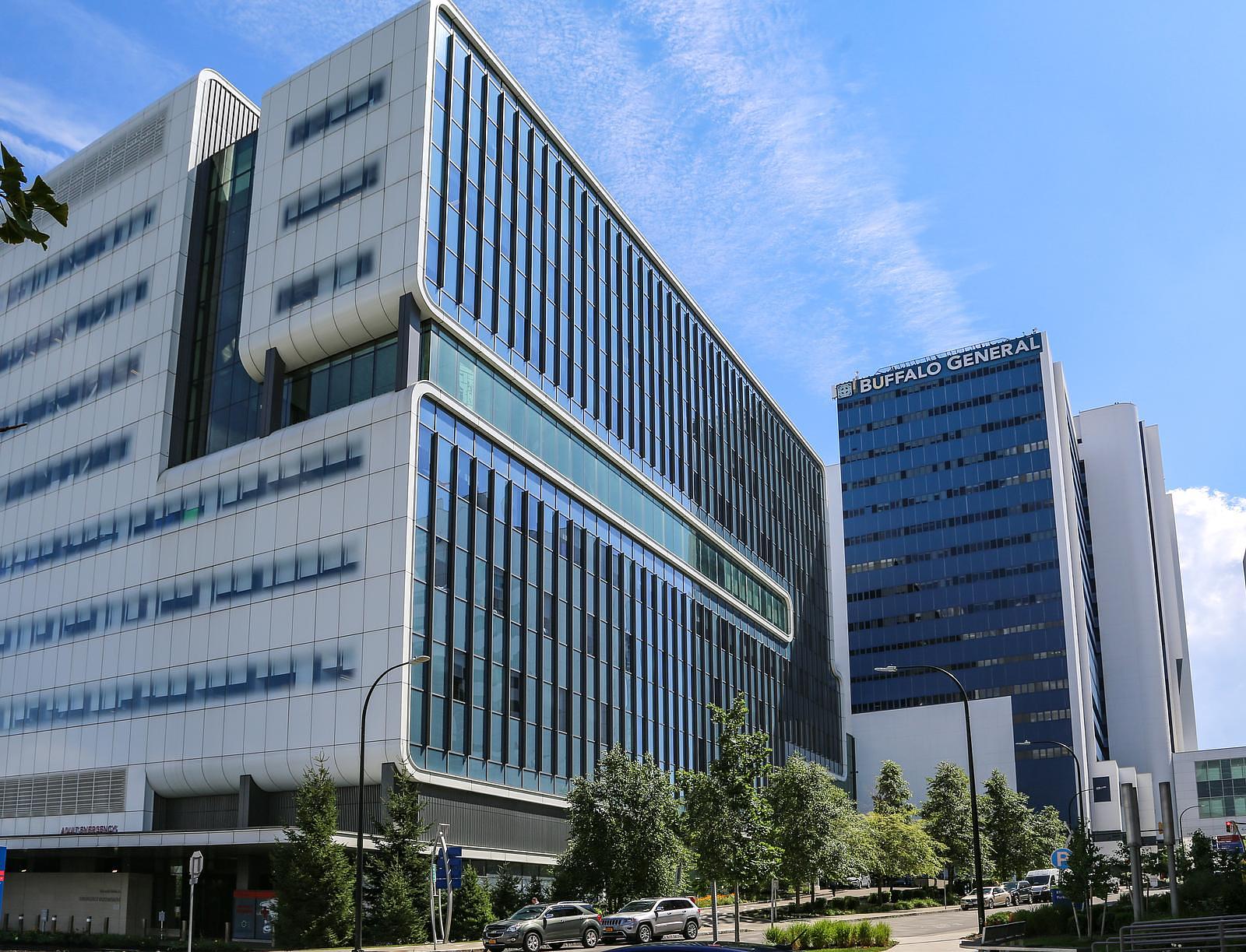
Located in a 10-story building adjacent to Buffalo General Medical Center on four floors atop the hospital’s emergency department, the institute is in a $291 million facility that also houses the Jacobs Institute and the University at Buffalo’s Clinical and Translational Research Center, home of the Toshiba Stroke Research Center.
With more than 20 neurosurgeons on staff, it has one of the nation’s largest robotic spine surgery programs. GVI neurosurgeons and heart specialists routinely host live webcasts to demonstrate new techniques to surgeons around the world. A recent broadcast during a medical conference in France drew 30,000 physicians.
The GVI was a hopeful concept – and a draw – when Iyer was recruited to Kaleida in 2009. Now, the availability of new technology, as well as the newest and most promising clinical trials, draws patients from all over the United States, as well as the Middle East, Asia and Europe.
“The visibility we’ve been able to get nationally and internationally really puts us on the map,” said Iyer, director of the GVI’s structural heart program and chief of cardiovascular services at Kaleida. “Now when companies have newer technology and devices, they are seeking us out, whereas 10 years ago, we were seeking them out.”
It's also what brought more than 4,000 physicians as well as med-tech and pharmaceutical executives to Buffalo to train in just the last four years.
“That’s the kind of impact we’re having that was unimaginable, inconceivable when we first opened the doors,” Siddiqui said. “We knew we would attract attention, but we’ve had multiple institutions from across the country and around the world here to see what the model was that had been created and see if they could recreate it in their own institutions.”
The future
The GVI has enabled clinical trials that would have been near impossible before, said Dr. Elad Levy, neurosurgery chairman at the Jacobs School of Medicine & Biomedical Sciences at UB and co-director of stroke services for Kaleida.
“It’s really helped create a paradigm shift in stroke care,” he said. “We’ve created a change from rehabilitation to intervention, just like with cardiac, where people can come in and get a treatment. We go in, pull out clots, use stents, angioplasty, whatever it takes to stop a stroke in its tracks.”
What comes next? Taking the GVI to the next level could mean expanding outside its existing footprint, Levy said. Often space is maxed out, though the new UB Neurosurgery ambulatory surgery center on Wehrle Drive in Amherst will help to relieve some pressure on the system.
“It’s a good problem to have,” Levy said. “I hope there is potentially a physical expansion or at least an expansion of services throughout the region.”
Expanding relationships with companies, entrepreneurs and the U.S. Food and Drug Administration is another goal and could bring in more business opportunities. Levy pointed to collaborations that have moved up to the next level with engineers and med-tech companies from across the country as well as co-development of technologies with the GVI in partnership with UB and the Jacobs Institute.
It could also mean helping other cities develop similar centers. Already, the GVI has hosted health care executives and researchers who want to learn how, but none have been able to recreate the model because so many institutions are still so entrenched in their own siloes, Siddiqui said.
“It is very hard,” he said. “In most places, the silos that Nick (Hopkins) broke are entrenched rigidly at every place.”
Gates Vascular Institute
Opened: 2012
Location: Buffalo Niagara Medical Campus
Services: Stroke, cardiac and vascular care
Founder: Dr. Nick Hopkins
Gates Vascular Institute innovation includes new devices, techniques in its 10th year - Buffalo Business First (bizjournals.com)
Oct 7, 2022
Dr. Adnan Siddiqui was taking a break from work, sitting at a table in one of the communal areas at the Gates Vascular Institute when he struck up a conversation with Dr. Vijay Iyer, an interventional cardiologist.
Siddiqui, a neurosurgeon, says Iyer was struggling to figure out how to treat a patient who needed an aortic valve replacement but he couldn’t find a good access point through the chest. Siddiqui suggested going in through the carotid artery in the neck.
“He said ‘I didn’t think that was possible’ and I said, "why not?' said Siddiqui, CEO of the Jacobs Institute and director of neurological stroke services for the GVI. "Now when there is no good access from the leg, they routinely go through the carotid to get to the heart.”
Another time, Siddiqui was treating an abnormal blood vessel in the brain and the risk of major bleeding was severe. He typically would have given the patient a drug to temporarily stop the heart. But Iyer suggested a pacemaker instead, which Siddiqui didn’t think was possible. Now that’s become standard practice too.
“There are so many examples of that, just an incredible amount of advances that have taken place because of the collisions that happen as a routine course of the day," Siddiqui said.
Siddiqui, a neurosurgeon, didn’t know many cardiologists a decade ago when he was working in the former Millard Fillmore Gates Circle Hospital. That was before the neurology and cardiovascular services lines under Kaleida Health and Erie County Medical Center came together at the Gates Vascular Institute in 2012.
As the facility marks its 10th year in operation, leaders say the center has surpassed expectations for enabling new procedures and novel treatments and innovating ways to treat patients.
First opened in March 2012, the GVI brought together researchers, surgeons, physicians and a range of other clinicians specializing in cardiac, stroke and vascular disease. It was the brainchild of neurosurgeon Dr. Nelson Hopkins, who predicted the GVI would revolutionize how people are treated for heart and neurological disorders.
International visibility
Located in a 10-story building adjacent to Buffalo General Medical Center on four floors atop the hospital’s emergency department, the institute is in a $291 million facility that also houses the Jacobs Institute and the University at Buffalo’s Clinical and Translational Research Center, home of the Toshiba Stroke Research Center.
With more than 20 neurosurgeons on staff, it has one of the nation’s largest robotic spine surgery programs. GVI neurosurgeons and heart specialists routinely host live webcasts to demonstrate new techniques to surgeons around the world. A recent broadcast during a medical conference in France drew 30,000 physicians.
The GVI was a hopeful concept – and a draw – when Iyer was recruited to Kaleida in 2009. Now, the availability of new technology, as well as the newest and most promising clinical trials, draws patients from all over the United States, as well as the Middle East, Asia and Europe.
“The visibility we’ve been able to get nationally and internationally really puts us on the map,” said Iyer, director of the GVI’s structural heart program and chief of cardiovascular services at Kaleida. “Now when companies have newer technology and devices, they are seeking us out, whereas 10 years ago, we were seeking them out.”
It's also what brought more than 4,000 physicians as well as med-tech and pharmaceutical executives to Buffalo to train in just the last four years.
“That’s the kind of impact we’re having that was unimaginable, inconceivable when we first opened the doors,” Siddiqui said. “We knew we would attract attention, but we’ve had multiple institutions from across the country and around the world here to see what the model was that had been created and see if they could recreate it in their own institutions.”
The future
The GVI has enabled clinical trials that would have been near impossible before, said Dr. Elad Levy, neurosurgery chairman at the Jacobs School of Medicine & Biomedical Sciences at UB and co-director of stroke services for Kaleida.
“It’s really helped create a paradigm shift in stroke care,” he said. “We’ve created a change from rehabilitation to intervention, just like with cardiac, where people can come in and get a treatment. We go in, pull out clots, use stents, angioplasty, whatever it takes to stop a stroke in its tracks.”
What comes next? Taking the GVI to the next level could mean expanding outside its existing footprint, Levy said. Often space is maxed out, though the new UB Neurosurgery ambulatory surgery center on Wehrle Drive in Amherst will help to relieve some pressure on the system.
“It’s a good problem to have,” Levy said. “I hope there is potentially a physical expansion or at least an expansion of services throughout the region.”
Expanding relationships with companies, entrepreneurs and the U.S. Food and Drug Administration is another goal and could bring in more business opportunities. Levy pointed to collaborations that have moved up to the next level with engineers and med-tech companies from across the country as well as co-development of technologies with the GVI in partnership with UB and the Jacobs Institute.
It could also mean helping other cities develop similar centers. Already, the GVI has hosted health care executives and researchers who want to learn how, but none have been able to recreate the model because so many institutions are still so entrenched in their own siloes, Siddiqui said.
“It is very hard,” he said. “In most places, the silos that Nick (Hopkins) broke are entrenched rigidly at every place.”
Gates Vascular Institute
Opened: 2012
Location: Buffalo Niagara Medical Campus
Services: Stroke, cardiac and vascular care
Founder: Dr. Nick Hopkins
Gates Vascular Institute innovation includes new devices, techniques in its 10th year - Buffalo Business First (bizjournals.com)
FirstUp views
0
FirstUp likes
0
FirstUp shares
0